
There is no worse sound on a fishing trip than a cooler lid opening onto lukewarm water with that morning's catch floating in it. I have heard that sound more times than I care to count, usually on day two of a trip that was supposed to last four. You drive three hours with the truck bed loaded, you mark the good holes on your map, and then the ice quits and everything you caught turns into a problem instead of supper.
Most people blame the cooler in that moment. Sometimes they are right, and a thin-walled box really cannot do the job. But most of the time the problem is how the cooler was packed and where it spent the afternoon. I have kept ice for the full length of a multi-day trip for three seasons now with the Titan Zipperless HardBody Cooler riding in the bed of my 2016 Tundra. Titan rates that cooler at two days of ice, and the rating is honest, but only if I do my half of the work. A cooler does not make cold. It only keeps the cold you give it, and how you give it that cold is the whole routine.
Two Days of Ice, If You Do the Work
The Titan Zipperless HardBody Cooler has held ice for two full days in my truck for three summers, and it has outlasted every cheaper cooler I owned before it. Check today's price and read the current buyer ratings before your next trip.
Amazon Check Today's Price on Amazon →Why the Ice Dies by Day Two
There are four places a cooler loses cold, and every one of them is something you control. The first is the box itself. If the walls start warm, the ice spends its first hours cooling plastic. The second is what you put inside, because warm food and warm fish steal cold that should be working for you later. The third is the sun, which turns a cooler into an oven unless you park it in shade. The fourth is the lid, because every time it opens, the cold you paid for pours out.
Fix all four and a good cooler like the Titan holds ice for two days without strain. Ignore any one of them and even the best box on the market hands you lukewarm water by lunch on day two. The steps below are the order I work through on every trip. They took a cooler that used to quit on me and made it something I rely on. None of it is complicated. It is deliberate.
Last July at Willard Bay, the water temp was pushing 80 and the forecast said 96 for three straight days. I ran the routine below and the Titan kept fish on ice from Friday afternoon until we filleted Sunday night. The only ice I bought was one bag on Saturday morning. That is what this routine does when it works.
Step 1: Pre-Chill the Cooler the Night Before
The single biggest mistake I see at boat ramps is a warm cooler. The box sits in a garage or a truck bed at 80 degrees all week, then gets loaded with ice and food an hour before the trip. That first bag of ice does not cool your catch. It cools the walls of the cooler down to temperature, and by the time the walls give up their heat you have already lost a good share of your ice.
The night before a trip, I put one bag of cubes in the empty Titan and let it sit with the lid shut until morning. When I load, I dump the melt water, wipe the inside dry, and start with a cold box. One bag of ice is a small price to pay for an extra day of cold, and it is the best single step in this whole routine.
If you cannot spare the bag, fill the cooler halfway with cold tap water and let it sit for a few hours, then dump it. That works, just not as well. The lesson is the same in every version: the colder the box starts, the longer the ice lasts. I have owned cheap coolers and good coolers, and they all follow that rule.
Step 2: Pack Cold Things in Tight and Leave No Air Space
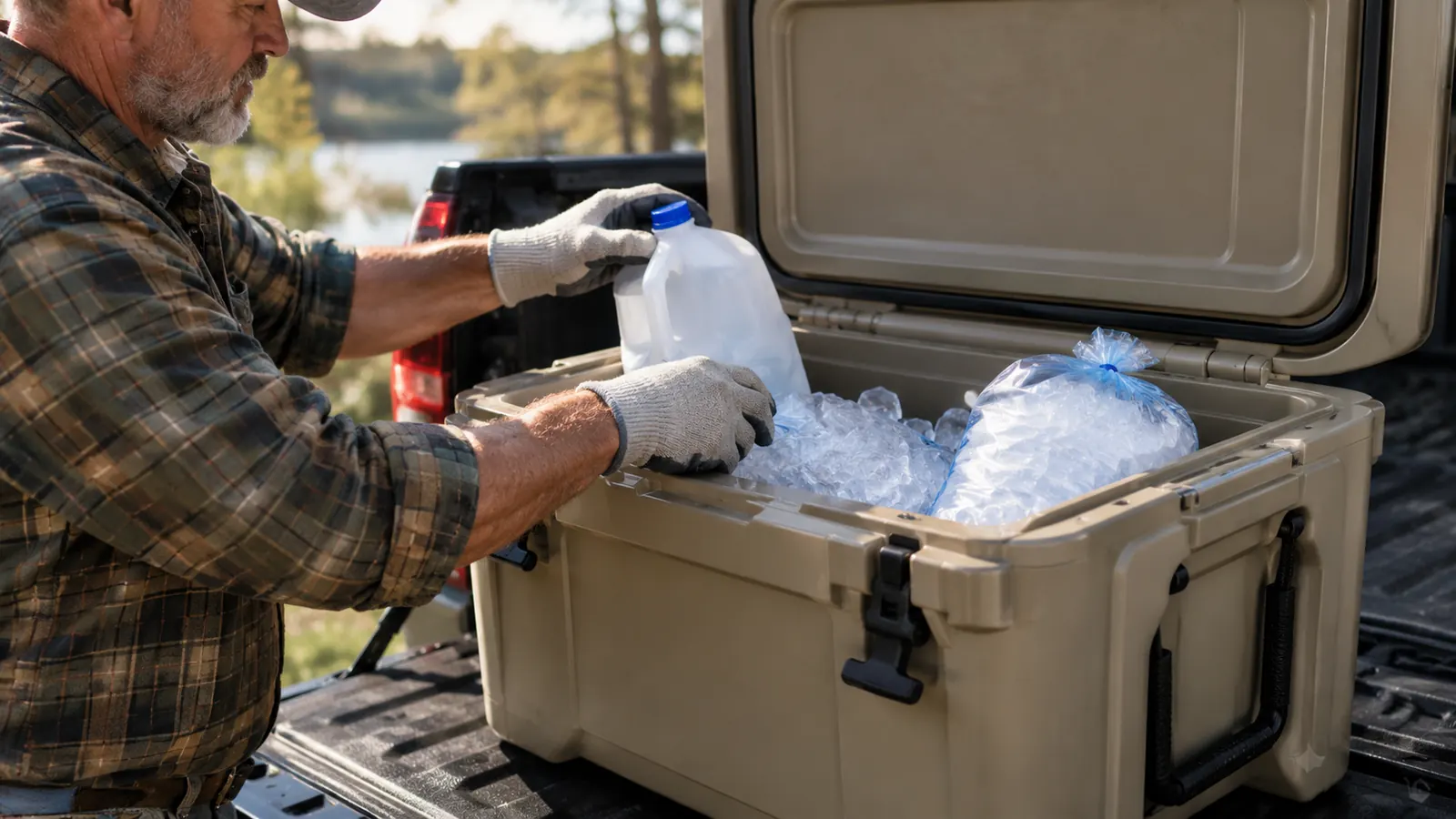
A cooler holds cold best when it is nearly full. Every pocket of air inside is a pocket of heat the ice has to absorb, so I pack the Titan tight and fill every gap with more ice or frozen food. I am not paying ice to chill air. Air does not hold cold. It just steals it from the ice that should be working on the catch.
Everything that goes in starts cold. Warm cans from the cab, a package of meat from the dash, a stringer of fish that sat in the sun, all of it drags the temperature up and burns ice. Food and drinks spend the night before in the house fridge. The fish go on ice the minute they leave the water, not when I get back to the truck. Cold in is the only way to get cold out.
I split the load across two coolers. The Titan is the fish cooler and it never opens for a soda. A separate cheap cooler holds the drinks and takes the traffic all day. Since I started running two boxes, the ice in the Titan has outlasted every trip I have taken it on. The drink cooler eats a bag of cubes a day. That is a trade I make happily when the alternative is losing the fish.
A note on block ice: when I can find it, I put a block in the bottom of the Titan and pack cubes around it. Block ice melts slow and keeps the bottom of the cooler cold where the fish sit. Cubes fill the shape of the space. The two together work better than either one alone.
Step 3: Put the Cooler in the Shade and Keep the Lid Down
I have watched a man set a brand new cooler in the back of his truck in full July sun and then complain that his ice was gone by noon. A cooler does not make cold. It only holds the cold you give it, and when the sun hammers the box all afternoon the ice is fighting a furnace. The furnace wins every time.
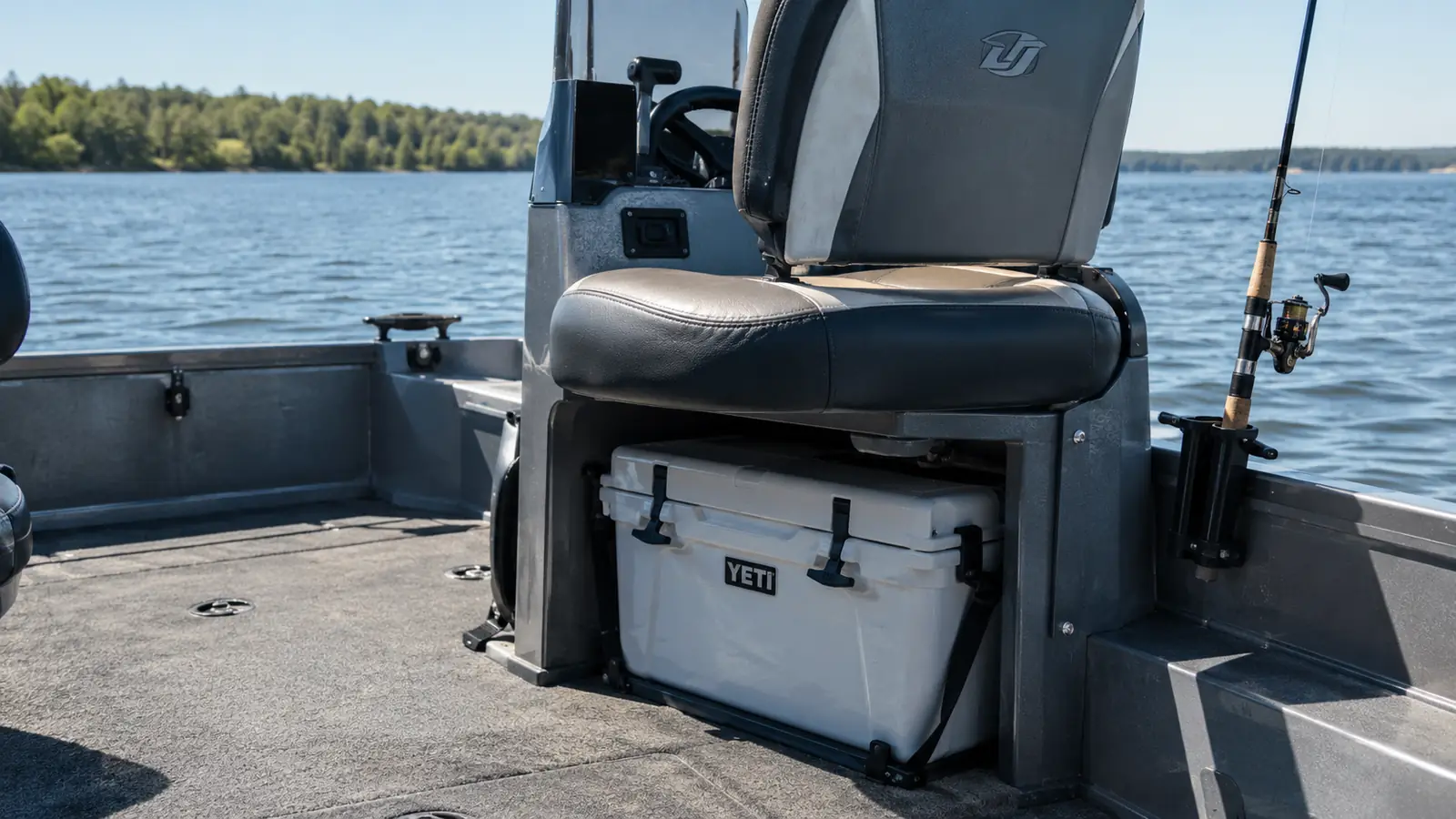
At camp I park the truck so the bed faces north, keeping the Titan in shade for most of the day. On the bank the cooler goes under the tailgate with a tarp draped over it. On the boat it rides in the shade of the console, strapped down so it cannot slide. Ten minutes of thought about where the sun will be saves a bag of ice a day.
Then I leave the lid alone. Every open lid pours cold out and lets warm air in, and the ice has to make up the difference all over again. I open the Titan once in the morning to check the fish and once at night to reset for the next day. If anyone wants something out of it, they take everything they need in that one trip and the lid goes straight back down.
If the only shade is the shadow of the truck, park so the shadow falls across the cooler when the sun is highest. That one move matters more than any accessory you can buy for the box. Shade is free and it works harder than almost anything in this list.
Step 4: Drain the Melt Water Every Morning
For years I left melted ice in the cooler because dumping it felt wasteful. That water was doing me no favors. Water carries heat better than ice does, and a cooler a third full of melt water will melt the remaining ice faster than a cooler that has been drained. The water has to go, and it has to go before it warms up.
Each morning I drain the Titan, set the fish on fresh ice, and put the lid back down in under a minute. On the river I drain it at the takeout. On a Willard Bay trip I drain it at the fuel stop, which is the same stop where I buy the next bag of cubes. The whole job takes ninety seconds and leaves the remaining ice doing its job instead of swimming in melt.
One warning from experience: do not drain a fish cooler in the bottom of the boat. Fish water in the bilge is a smell that will live in that boat for the rest of the season. Drain on the ramp, or into a bucket that gets dumped on shore, and rinse the bucket before it goes back in the truck.
Step 5: Plan the Ice Top-Up Before You Leave
No cooler, the Titan included, turns a five-day trip into a one-bag trip. Ice is a consumable, same as fuel. The trick is knowing when the first load will run out and having the second load planned before you leave the driveway, instead of finding out at six in the morning on day three that the nearest store is forty miles away.
For a three-day trip I start with the pre-chilled box from Step 1, then pack the fish on a block of ice. On the morning of day two I buy a fresh bag of cubes when I am already in town for gas and bait. That single top-up carries the fish home. Most trips end with block ice still holding in the bottom of the cooler.
When the trip takes me somewhere with no store, I freeze two gallon jugs of water at home and lay them flat in the bottom of the Titan before anything else goes in. Jugs melt slower than cubes, they sit flat under the fish, and when they finally melt I have cold drinking water instead of a problem. That trick has saved more than one late-July trip on the Weber.
Keep an old bath towel in the truck on top of the cooler. When you stop for ice, dry the lid before you open it and wipe the lid edge clean. A tight seal is what keeps cold in, so treat the seal like part of the system. Grit and sand are what wear a cooler out.
What Else Helps
The cooler is half the system. How the fish is treated before it ever touches the box is the other half. A trout that sits on a stringer in warm river water for two hours is already on its way to spoiled by the time it hits the ice, and no cooler can fix what happens before the fish reaches it. Clean the fish, bleed it, and get it cold fast. No cooler money can replace that part.
A damp towel over the lid helps in dry country, where evaporation pulls heat off the top of the box. It does nothing in humidity, so do not treat it as an answer. What helps everywhere is pre-freezing anything that can be frozen. A package of burger that goes into the cooler still frozen is ice that also happens to be dinner. It works for you twice.
One more cheap fix: keep the cooler off a hot truck bed. A dark bed in July can hit temperatures that go straight through the bottom of the cooler and into the ice. A scrap of closed-cell foam pad under the box, even a folded moving blanket, stops most of that heat. Five minutes of setup saves ice every day of the trip.
The day I stopped opening the Titan just to look at the fish is the day my ice started lasting the whole trip.
Make This the Last Cooler You Buy
If you are tired of coolers that quit on day two, the Titan Zipperless HardBody Cooler is the box I have trusted for three seasons of trout and bass trips. It keeps ice the way the rating says it will, as long as you put in the work above. Check today's price on Amazon and read the buyer reviews before your next trip.
Amazon Check Today's Price on Amazon →