
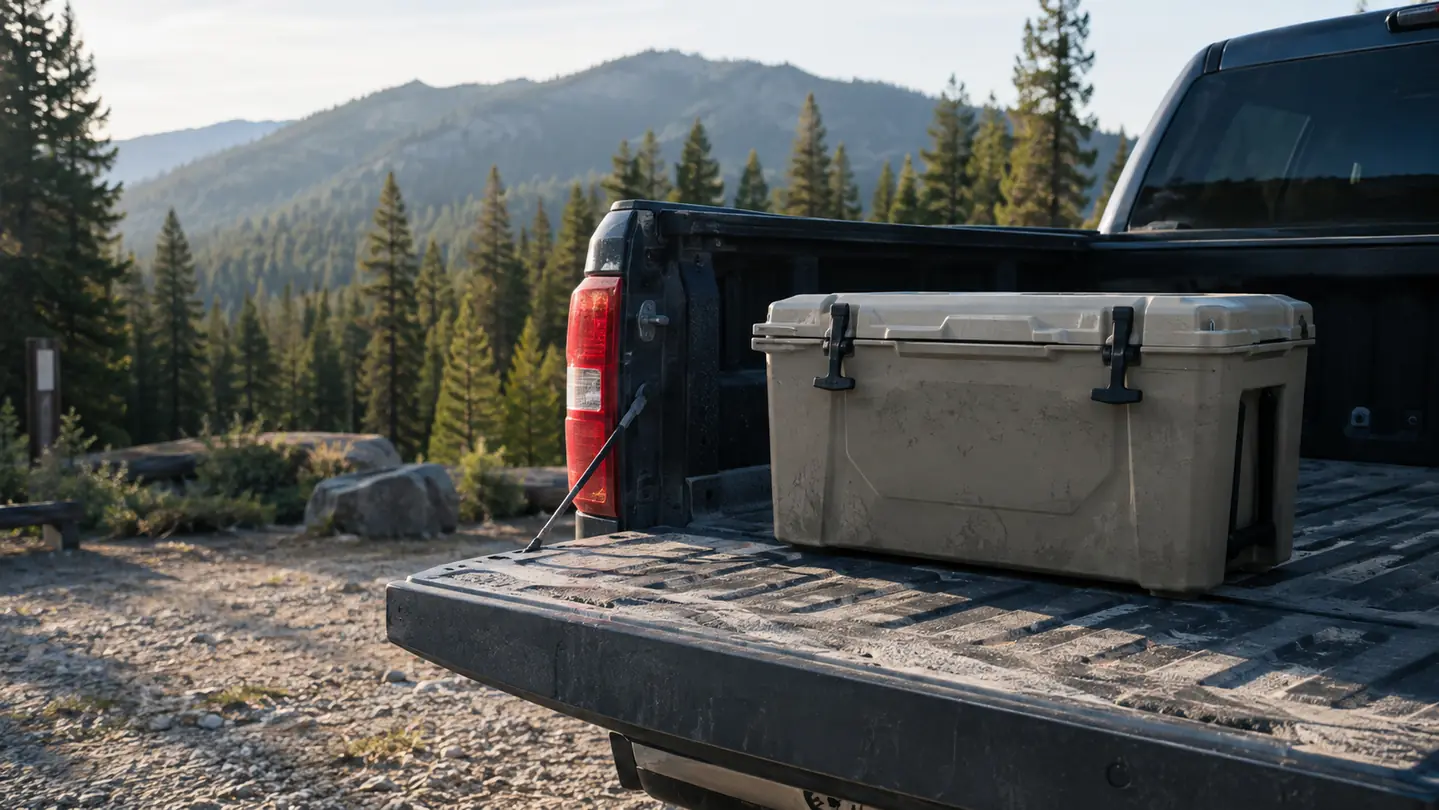
Day three of a September elk hunt, and I am pouring warm water out of a cheap cooler. The meat rode home fine, because it sat on ice that was frozen solid to begin with. The drinks did not. By the second afternoon everything in there was floating in lukewarm water, and by the third day I was rationing the one bottle I had the sense to keep in my pack.
That hunt sent me shopping for a real cooler, and the one I brought home was the Titan Zipperless HardBody. Three years later it has been through two archery elk seasons, a rifle deer season, a summer of bass fishing at Willard Bay, and more trout trips to the Weber and the Ogden than I can count. It has bounced in the bed of my Tundra on washboard roads, sat on a tailgate in full sun, and taken a fall onto gravel. This review is what three seasons of honest use taught me, including the parts the product page does not tell you.
The Quick Verdict
A rugged cooler that lives up to its two day ice claim when you load it the way physics demands. Not perfect, but it does the job of coolers that cost more.
Amazon Check Today's Price →The cooler I reach for first on every trip now
If you are tired of watching ice die by the second morning, this is the cooler to put on your tailgate. It takes the abuse, holds the cold, and costs less than the big names.
Amazon Check Today's Price on Amazon →How I've Used It
This cooler lives in my truck from April through November, and that is the first honest thing to know about it. A cooler you have to go find in the garage is a cooler you will not use. This one earns its keep because it is always in the bed under the tonneau cover when I head out.
Most of my trips are one or two nights. I fish the Weber after work in the spring, which means the cooler carries the day's catch and a few cold drinks over washboard roads that already killed two cheaper coolers. In September it brings elk meat out of the mountains on the drive home. In October it holds a deboned deer for the three hours between camp and my garage.
The heavy use matters, because a cooler that only goes to the lake once a summer will look great forever. Mine gets loaded, dumped, hosed out, and loaded again. It has been knocked off the tailgate onto gravel, used as a step to reach tie-downs, and sat on by a sixty eight pound chocolate Lab named Ruby who refuses to believe the lid is not a bench. Those are the conditions this review is based on.
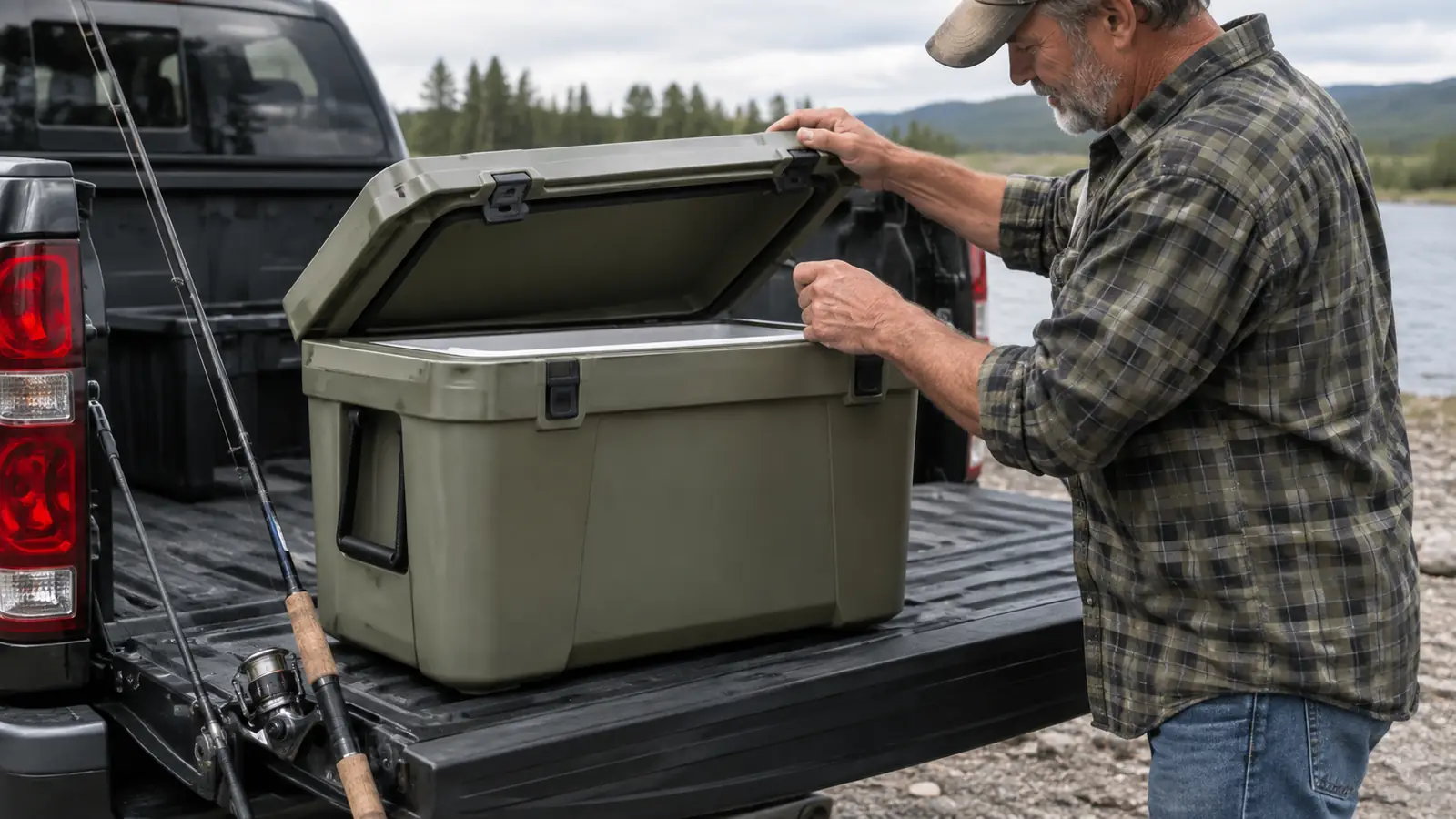
What 'Keeps Ice 2 Days' Actually Means
The two day claim is honest, but nobody tells you the conditions the math assumes. The cooler has to start cool. The ice has to be cold when it goes in, not warm from the grocery store aisle. And the cooler needs to be full, because a half full cooler loses ice much faster than a full one. The empty space is full of warm air, and every time you open the lid, the ice has to cool that air down again.
In practice, here is what I get. A full load of bagged ice on a Friday afternoon in September keeps drinks cold through Sunday morning, with ice still left for the drive home. In July at Willard Bay, with the cooler sitting in the truck bed in full sun, I get about a day and a half before the ice is gone. That is the honest range. Two days means two days the way a cooler actually behaves, not two days of neglect.
The trick nobody prints on the box is to pre chill the cooler the night before. I throw one bag of ice in there, or a couple of frozen jugs, and close the lid. In the morning I dump the water, load cold food and cold drinks, and add fresh ice. That one habit buys me most of a second day. Do that, and this cooler will outlast any trip I take.
One more thing about the two day number: it assumes the lid is not coming off every hour. On a bass trip, where the cooler gets opened constantly for drinks, plan on less. On an elk hunt, where it opens twice a day to check the meat, the ice lasts longer. Treat two days as a ceiling, not a promise, and you will never be let down.
The Zipperless Lid: What It Costs You
The design that makes this cooler different is the one people ask me about first. There is no zipper to snag and no gasket you peel back. The lid seals by pressure around the whole edge, which is what the zipperless part of the name means. After three seasons I can tell you what that design buys you, and what it quietly costs you.
What it buys you is a seal that does not wear out the way zippers do. I have watched zipper coolers die from one snagged zipper in the back of a truck, and that is not a repair you can make on a tailgate. The Titan lid has been sat on, stepped on, and slammed for three seasons, and it still seats itself with the same solid feel as the day it was new.
What it costs you is this: you have to line the lid up. If you drop it on crooked, the seal is worse, and you will find out the next morning when you have less ice than you expected. Sand and pine needles also work their way into that channel, and you have to rinse it out now and then. Ten seconds with a hose. It is small maintenance, and it is maintenance the ads never mention.
One more design point in its favor: there is no separate gasket to lose, no small part to break, and no way to install it wrong. The seal is part of the lid itself. That matters on a cooler that lives in a truck bed, because a loose part would be gone by the end of the first gravel road.
A full load of ice on a Friday afternoon in September is still holding on Sunday morning, with ice left for the drive home.
What Three Seasons Did to It
So what actually shows wear? The outside is covered in what I would call honest scars. It has slid across gravel, which scuffed the bottom edge. The latches are simple molded hooks, and all four still snap shut with the same sound as the first day. Nothing has cracked, nothing has warped, and the pins have not worked loose. That is more than I can say for the two cheap coolers this one replaced.
The drain is my one real gripe. It drains slowly, and it leaves a last inch of water in the bottom unless you tip the cooler up to get it out. Tipping a fully loaded cooler is not easy, so mostly I just sponge it out. It is a small thing, but it is the kind of small thing you learn to live with, and the product photos never show a guy wrestling a wet cooler on a boat ramp.
I cannot tell you how it handles a bear, because I have never given one the chance. What I can tell you is that it has spent three seasons in a truck bed, it has been rained on, snowed on, and baked in July sun, and it still holds ice as well as it did in year one. The rubber around the lid has not dried out or gone brittle. That is the test that matters to me.
One honest physical note: this cooler is heavy. Empty, it is manageable. Loaded with a quarter of an elk and a bag of ice, it takes two hands and a plan to get it off the tailgate. I am fifty eight years old and I notice. If you hunt alone in steep country, factor that in before you buy.
The Price Question Nobody Wants to Ask
Here is where I have to be straight with you. The Titan costs real money, and I am not going to pretend it is a bargain bin purchase. It is priced well below the big name rotomolded coolers with the bear proof marketing, but it is still a serious purchase. You have to decide whether a cooler that keeps ice for two days is worth buying once instead of replacing a cheap one every other year.
I ran the cheap cooler math for years, and the cheap cooler was the expensive one. They leak through the drain plug, they sweat, they lose ice overnight, and when the zipper or the handle gives out, you throw the whole thing away and start over. I got tired of that cycle. This cooler is built to be the last cooler I buy for this truck, and that is worth something to me.
But if your cooler rides from the house to the lake and back, and its hardest job is holding sandwiches, do not buy this. A cheaper cooler will do that job, and I will say it plainly. Buy the Titan when you pack meat, when you spend nights away from a freezer, or when you are done buying a new cooler every other season. Match the tool to the job and you will not be disappointed.
And for what it is worth, I have handled the big name coolers at the sporting goods store. They are nice. They are also heavier, and the price difference buys a lot of gas for a lot of trips. What I have never seen is proof that they hold ice meaningfully longer once you load them right. Good enough has served me well for three seasons.
What I Liked
- Holds ice through a full weekend when you load it full and pre chill it
- No zipper to snag, and the seal has not worn in three seasons
- Took three seasons of truck bed abuse without cracking or warping
- Priced below the big name rotomolded coolers
- Latches and hinge pins have not loosened
Where It Falls Short
- You have to seat the lid correctly or the seal is worse
- Drain is slow and leaves water in the bottom
- Heavy when loaded, especially for one person
- Sand and pine needles collect in the gasket channel
- Best performance requires pre chilling the night before
The Bottom Line After Three Seasons
Would I buy it again? Yes, and I would buy the same size. It does the job I bought it for, it has not needed a single repair in three seasons, and it still seals like the day it arrived. It is not the prettiest cooler on the lake, and I will not pretend it is. It is the one I grab, because it works, and because it has never let me down when the meat was on the line.
The honest summary is simple. This cooler does most of what the famous brands do, at a price that leaves you money for gas. You give up a little status at the boat ramp, and you take on a small learning curve with the lid. What you get is a cooler that holds ice, survives the truck bed, and does not make you flinch when it takes a hit.
I keep a notebook of gear that has failed me over the years, and it has pages of zippers, latches, handles, and hinges that quit at the worst possible moment. The Titan has not earned a line in that notebook. That is the highest praise I know how to give a piece of equipment, and it is the real reason this review exists.
For the money, the honest alternative is a cheaper rotomolded cooler from a brand with less name recognition, or a lined soft cooler if you mostly carry food a few hours. I looked at both before I settled on the Titan. What pushed me this direction was the zipperless seal and the simple latches, because those are the two things that fail on every other cooler I have owned.
Who This Is For
Buy this cooler if you pack meat out of the backcountry, if you spend nights away from a freezer, or if you are tired of replacing a cheap cooler every other season. It is built for a person who loads gear the night before, pre chills the box, and wants one piece of equipment that will not quit on him. That is the kind of hunter and fisherman I am, and it is exactly what this cooler is.
If your trips are like mine, a weekend of ice is the difference between meat you trust and a long drive to a freezer you do not know. I have made that drive. I would rather own this cooler.
Who Should Skip It
Do not buy this cooler if it only has to hold lunch for a day at the lake. A soft side or a cheap hard cooler will do that job with less weight and less money. Skip it, too, if you will not get used to seating the lid, or if you do not want to rinse sand out of the gasket channel now and then. This is a tool with habits, and it rewards the person who treats it like one.
If you buy this cooler because you think it will make you look like the guys on the hunting shows, spend your money on boots instead. It is a tool. The day I stopped caring what my gear looked like and started caring whether it worked was the day I stopped wasting money on gear that did not earn its spot in the truck.
Pack for nights, not hours
Before you buy another cheap cooler that dies by the second morning, look at the Titan that has done three seasons in my truck bed. It holds the cold, takes the abuse, and leaves you money for gas.
Amazon Check Today's Price on Amazon →