
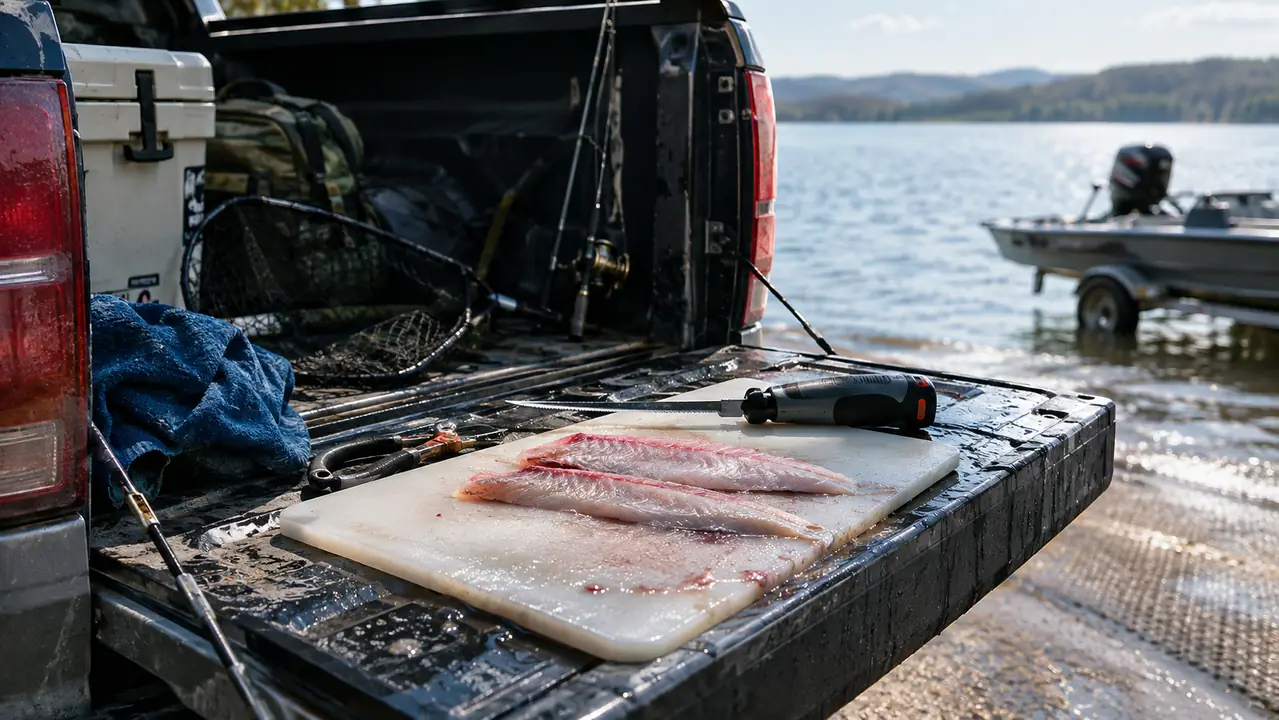
I have cleaned fish with both of these knives on the same tailgate, in the same wind, on the same kind of cold April morning when your hands stop working right about the time you get to the fourth fish. So this is not a spec sheet comparison. It is what happened when I put the Bubba Pro Series electric fillet knife up against the Rapala electric knife that a friend of mine has been running for years, and cleaned a limit with each one.
The short version is that the Bubba costs a lot more and is worth it if you clean fish often enough to care. The Rapala is a perfectly reasonable knife for someone who cleans a dozen fish a year. Below is the long version, because the difference between those two sentences is about four hundred dollars over ten years and you deserve to know where the money actually goes.
The short answer, before the details
If you clean fish more than about ten times a season, buy the Bubba. The reach of the lithium battery, the way the blade tracks the ribs instead of chattering across them, and the handle that does not slide when it is covered in slime are all things you notice on the second hour, not the first fish. That is the whole argument for it.
If you fish a few times a year and clean a handful of trout, the Rapala will do the job and leave money in your pocket. There is no shame in that. I have watched my brother in law clean perch with one for six seasons and he has never once complained about it. He also cleans maybe thirty fish a year, and thirty fish a year is not enough use to expose the places where the cheaper knife gives up.
Everything past this point is me showing my work. If you want the version with more seasons behind it, I wrote a longer piece about living with the Bubba over a full year that covers the parts a comparison has no room for.
How the two knives compare
| Bubba Pro Series Electric | Rapala Electric Fillet Knife | |
|---|---|---|
| Who it is for | Anyone cleaning fish weekly through a season, or cleaning a full limit at once | Occasional use, a handful of fish at a time, close to an outlet or a small battery pack |
| Power source | Lithium battery in the handle, no cord to fight and no inverter in the truck | Corded or lower capacity battery depending on the model you buy |
| Run time on one charge | Enough for a limit and then some, with power left over for the next morning | Fine for a short session, and the corded version never runs out at all |
| Blade tracking along the ribs | Stays put and follows the bone instead of skipping off it | Tends to chatter on larger fish with heavier rib structure |
| Grip when wet and slimed | Textured non slip handle that stays controllable with cold wet hands | Smoother plastic that gets slippery once the work gets messy |
| Price | Costs several times more, and you feel it on the day you buy it | Inexpensive enough to be an easy first electric knife |
| Cold weather behavior | Battery holds up in freezing air better than I expected it to | Battery models fade noticeably once the air drops near freezing |
| Long term durability | Still tight and quiet after a season of weekly use | Serviceable, though the motor housing loosens over years of hard use |
Cutting speed and how each one feels in your hand
The first real test was at Willard Bay last June. I came off the water a little after eleven with a good mess of bass and wipers in the livewell, and I set up on the tailgate of my truck with both knives sitting on a cutting board. I cleaned every other fish with a different knife so that neither one got the easy half of the pile.
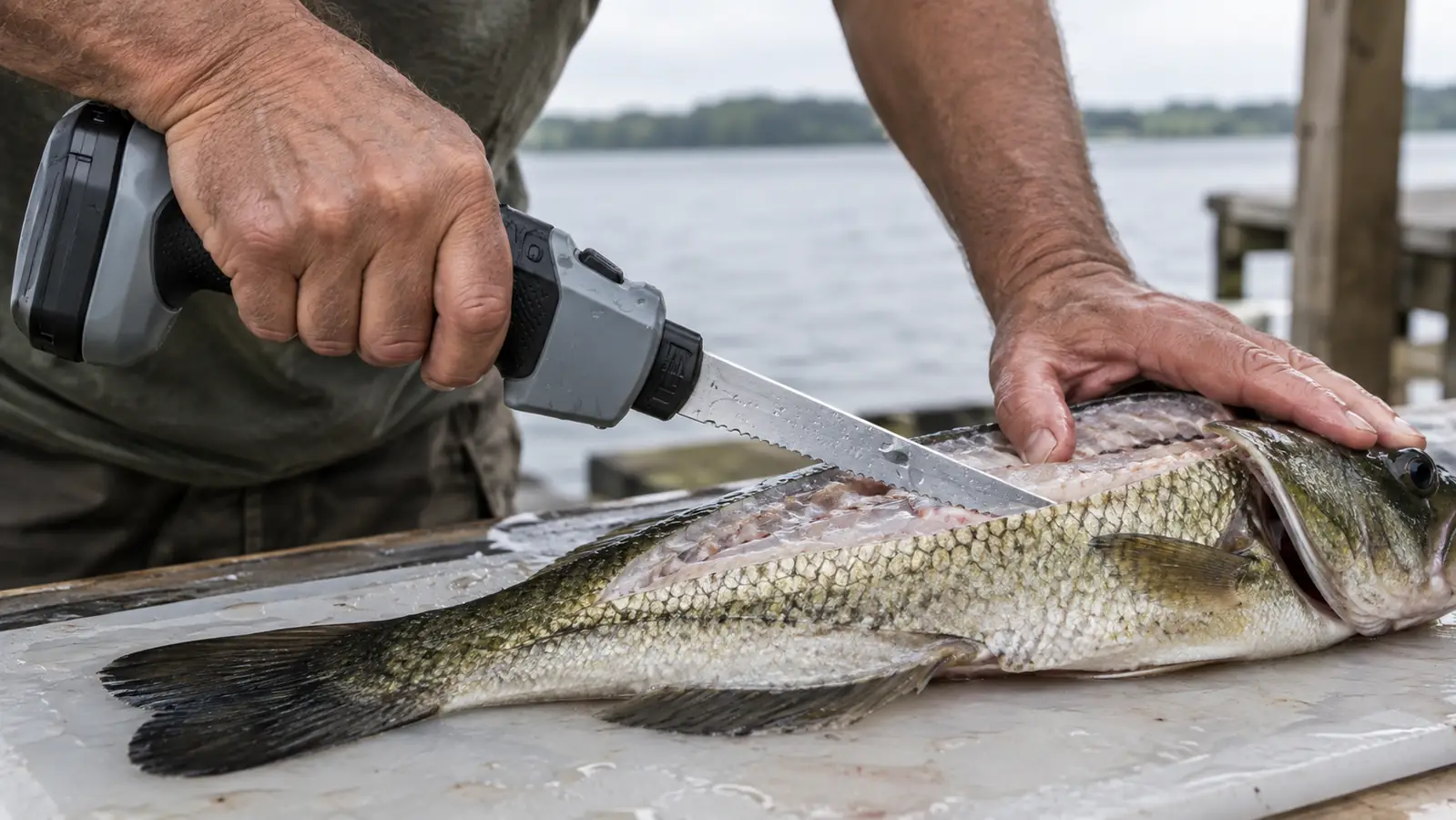
The Bubba went through the first fish without arguing about it. You set the blade behind the pectoral fin, angle down until you find the spine, and then it walks along the rib cage on its own. I am not exaggerating when I say the knife does most of the steering. Your job becomes holding the fish still and keeping the angle honest.
The Rapala cut fine on the smaller fish. On the bigger ones it started to chatter where the ribs get thick, and chatter is the thing that costs you meat. Every time the blade skips it lifts, and every time it lifts you either leave meat on the frame or you drive the blade into the rib and have to back out and start the cut again. Over sixteen fish that added up to a noticeable difference in what ended up in the bag.
The other difference is the handle, and it is bigger than it sounds. By the eighth fish both knives were coated in slime and my hands were wet and cold. The Bubba has a textured grip that keeps working in that condition. The Rapala got slick, and a slick handle on a powered blade means you slow down on purpose, which is the opposite of what you bought an electric knife for.
I timed the last four fish with each. The difference was not dramatic on any single fish, somewhere in the range of half a minute. Multiply that across a full limit and add the cleanup passes you do not have to make because the first cut was clean, and you are looking at real time back at the end of a long day.
Fish size changes the picture more than either brand wants to admit. On trout out of the Weber, both knives are fine. A twelve inch rainbow does not have enough rib structure to give a powered blade any trouble, and if trout is most of what you clean you could stop reading here and buy either one. The gap opens up on anything with a heavier frame. On wipers and on the bigger largemouth out of Willard, the Bubba stayed in the cut and the Rapala did not, and that is consistent every time I have run them side by side.
Blade choice matters too, and people skip past it. A blade that is too short for the fish makes you work in stages, and every extra pass is another chance to tear a fillet. A blade that is too long is clumsy on small trout. Both of these knives take a range of blades, so match the blade to the fish you actually clean most, not to the biggest fish you have ever caught. I keep a shorter set for trout and perch and a longer set for bass, and swapping takes about ten seconds.
Battery life, charging, and what happens when it is cold
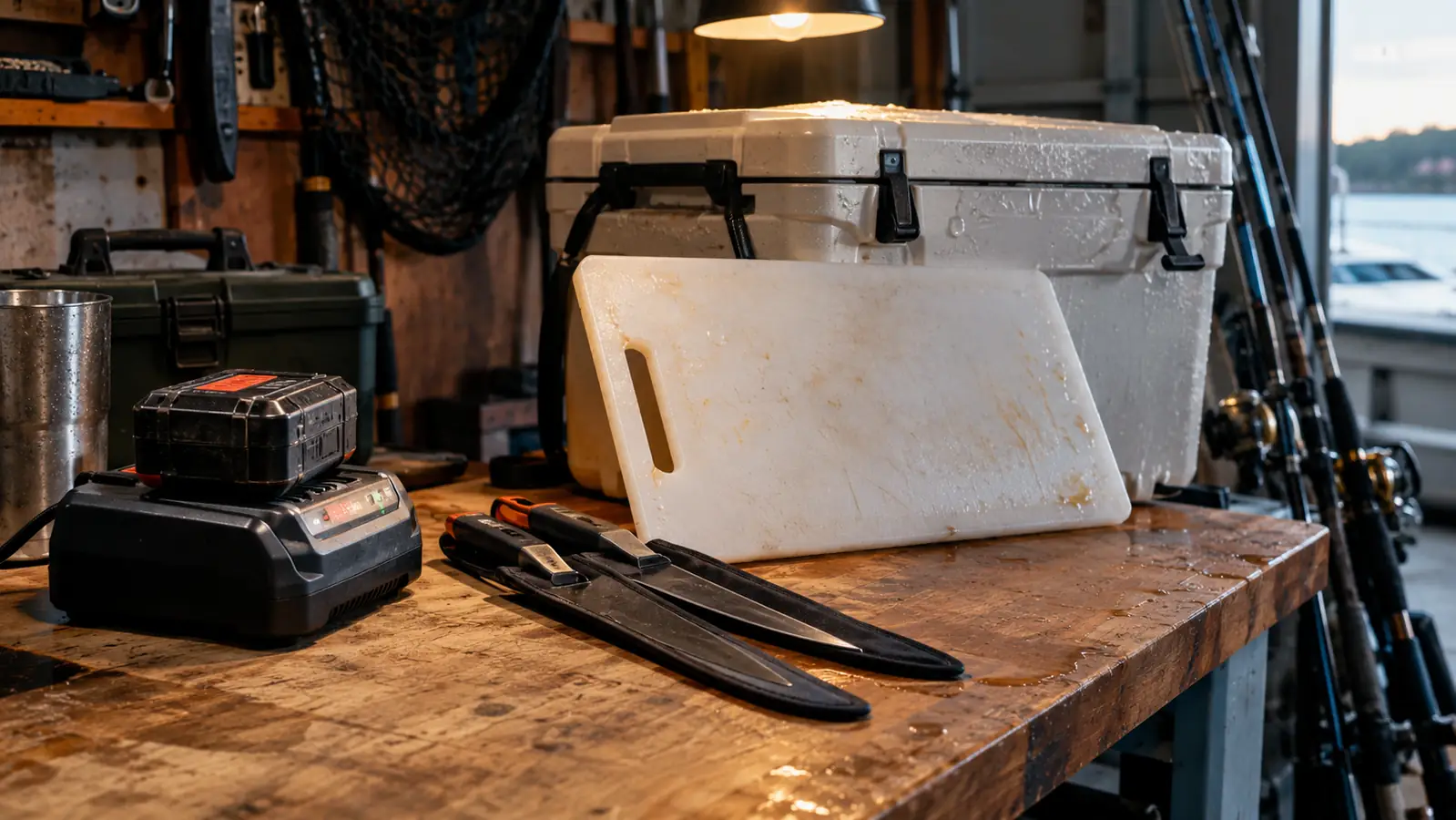
This is where the two knives genuinely separate, and it is the part nobody tells you about when they compare them online. The Bubba runs on a lithium battery that lives in the handle. I charged mine the night before that Willard Bay trip and cleaned every fish I had, and it never slowed down. I have since gone two trips on one charge without thinking about it.
The corded Rapala never runs out, which sounds like a win until you are standing at a boat ramp with no outlet, or on the ice at Pineview in January, or on the tailgate at a camp two hours from pavement. A cord means you are tethered to something. I ran an inverter off the truck for years and it works, but it means the truck has to be running and parked close and the cord has to stay out of the water and the fish gut pile. That is three things to manage that the Bubba simply does not ask of you.
Cold is the other half of it. Lithium batteries lose capacity in freezing air, all of them do, and I expected the Bubba to disappoint me on the ice. It did not. In January at Pineview, air temperature somewhere in the low twenties, I cleaned a bucket of perch and the knife never bogged. It did not run as long as it does in June, but it ran long enough, and I keep the battery inside my jacket on the walk out anyway, which is a habit worth having with any battery tool in winter.
The battery model of the Rapala faded faster in the same conditions. Not to the point of being unusable, but you notice the motor working harder near the end, and a motor working harder is a motor that will not last as many seasons.
One honest mark against the Bubba here. The battery is proprietary. If it dies in five years you are buying a Bubba battery and not a generic pack off the shelf. That is worth knowing before you commit, and it is the same trade you make with most cordless tools now.
The knife I reach for on every trip
After a season of weekly use on bass, trout and perch, the Bubba Pro Series is the one that lives in my truck. If you clean fish often enough to have an opinion about fillet knives, this is the one I would buy again.
Amazon Check Today's Price on Amazon →What a season of hard use did to each one
Durability is hard to judge honestly in a short test, so I will tell you exactly what I have and what I have seen. My Bubba has been through one full season of weekly use, plus a winter on the ice. It gets rinsed at the spigot, wiped down, and thrown in a bin in the bed of a 2016 Tundra with a hundred and ninety thousand miles on it. Nothing about that bin is gentle. The knife is still tight, still quiet, and the blades still lock in without any play.
The Rapala I borrowed belongs to a friend who has run it for six seasons. It still works. The motor housing has developed a little play, and there is a rattle when it is running that was not there when it was new. He does not care and it still cuts fish. That is a reasonable outcome for a knife at that price, and I want to be fair about it rather than pretend the cheap option falls apart.
The blades are the real consumable on both. Electric fillet blades dull, they bend if you torque them, and they are cheap enough to replace that you should replace them before they get bad. Both knives take replacement blades. Keep a spare set in the truck and you will never have a bad cleaning session because of a tired blade.
The one durability point I will give the Bubba without hesitation is the sealing. Fish cleaning is wet work, and water finding its way into a motor is how these things die. After a season of getting rinsed at the ramp I have seen no sign of water intrusion at all. If you want the argument for an electric knife over a manual one in the first place, I laid that out in ten reasons an electric knife earns its keep.
What I do at the end of a session is the same for either knife, and it is worth stating because it is most of why mine still works. Pull the blades, rinse them and the housing under clean water, wipe everything down, and let it dry out of the case before it goes back in. Storing a wet knife in a sealed case is how you ruin one, and it does not matter what you paid for it. That takes about two minutes and it has kept a season of hard use from showing on either knife I have handled.
So which one should you actually buy
Count the fish. That is genuinely the whole decision. If you clean more than about fifty fish in a year, or if you regularly clean a full limit in one sitting, the Bubba pays you back in time, in meat you do not leave on the frame, and in not standing there wrestling a slick handle with cold hands. That is the buy.
If you clean a couple dozen fish a year, close to the truck or close to an outlet, the Rapala is an honest tool and the money you save is real money. I would not talk anybody out of it. I would only tell them that if their fishing picks up, they will feel the ceiling on it inside two seasons.
The mistake I see people make is buying the cheap one twice. They buy an inexpensive electric knife, use it hard for three years, wear it out, buy another one, wear that one out, and then buy the good one anyway. If you already know you are the kind of person who cleans fish every week from April through October, skip the middle step.
For what it is worth, I bought mine with my own money after borrowing one at a camp and being annoyed for the rest of that trip that mine was not as good. That is the most honest recommendation I know how to give.
Still deciding? Count the fish you clean in a year
If the answer is more than about fifty, the Bubba Pro Series is the one that stops costing you time and meat. Have a look at what it is going for today and decide with your own eyes.
Amazon Check Today's Price on Amazon →