
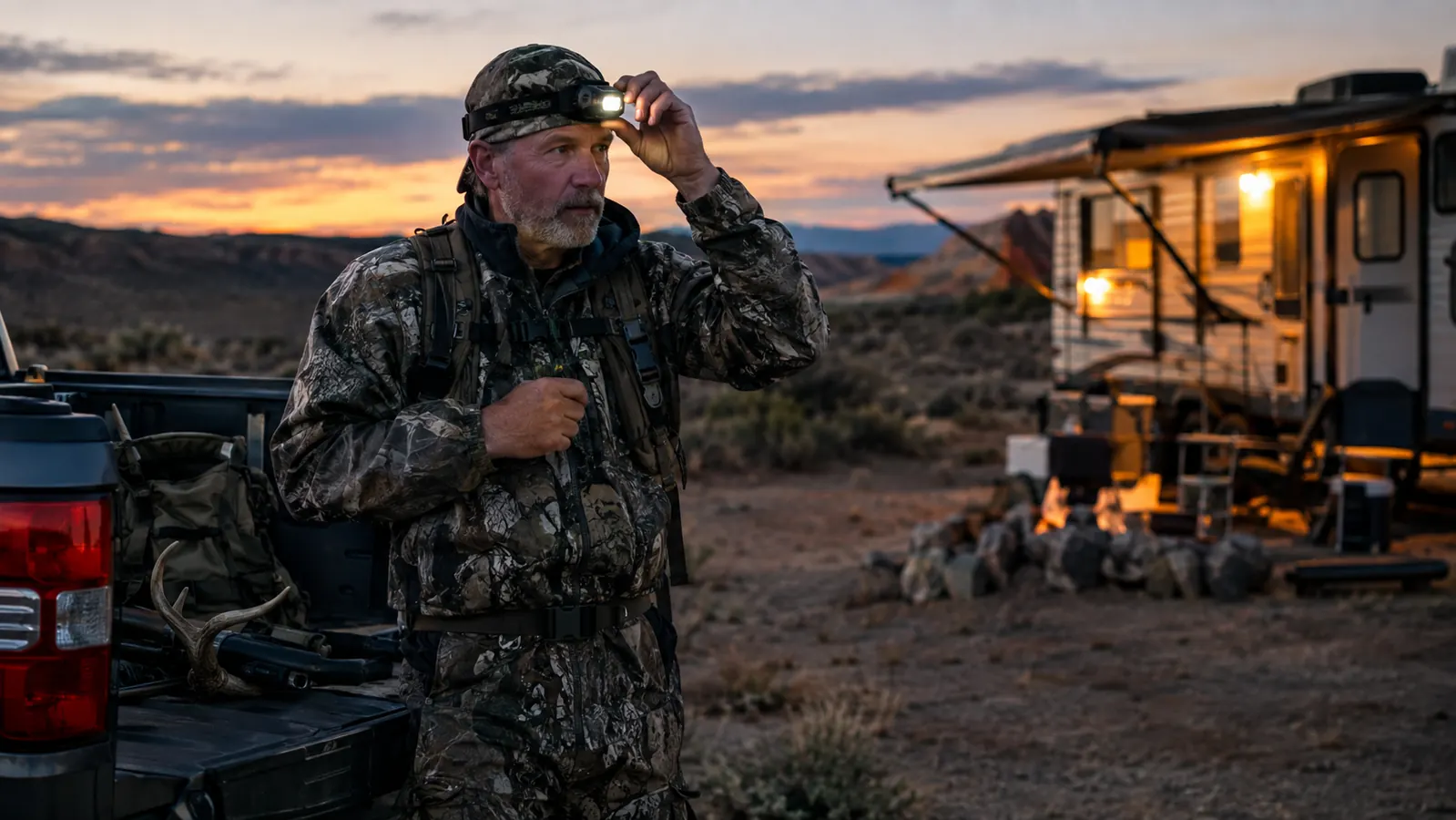
Last October I dropped a brass bolt in the leaves while I was quartering a mule deer on a ridge above the Ogden River. The air was around 40 degrees, and I had maybe an hour of good light left before the canyon went dark. I spent fifteen minutes on my hands and knees with a little twist flashlight in my teeth, and I could feel the daylight burning off while I worked. The next morning I ordered the LHKNL Headlamp from Amazon, mostly because it kept showing up in hunting forums, and I told myself it only had to last one season to pay for its place in my pack. Two seasons and a lot of wet weather later, it is still the light I reach for first. I have also carried Petzl headlamps for years, first when I worked as a heavy equipment mechanic and later on hunting and fishing trips, so this comparison comes from real nights in the field, not from a spec sheet.
Which one should you buy? It depends on how the light will earn its keep. If you want a single headlamp that can be thrown into a truck bed, charged from the same USB-C cord as your phone, and beaten up without guilt, the LHKNL is the easiest recommendation I can give. Petzl still makes a more refined tool for someone who wants a smaller, lighter light with a smoother beam. Both will keep you from stumbling around in the dark. After sixteen months of running them side by side on elk hunts, deer hunts, ice fishing trips, and trout streams, this is what I found.
The Comparison at a Glance
| LHKNL Headlamp | Petzl Headlamp | |
|---|---|---|
| Charging | USB-C port under a rubber cover, charges from any phone cord or power bank | Internal battery often needs a proprietary charger from the same brand |
| Trail beam | Wide flood, plenty for camp, but less depth on uneven ground | Smoother beam with a clear center, easier to read the trail ahead |
| Weight and bulk | Heavier body, you feel it after a long night | Lighter and lower profile, easy to forget you are wearing it |
| Strap grip | Wide strap with grippy backing, stays put over a wool cap | Thinner strap, slides on a rain hood |
| Durability | Rubberized body, survived a fifteen foot bounce off rocks | Tighter build, but more delicate around the swivel |
| Winter controls | Large button easy to find with insulated gloves | Small button with precise feel, harder to hit with mittens |
| Low battery warning | Runs strong, then the meter drops fast when it is cold | Drops to a dim mode early enough to give you time to get back |
Where the LHKNL Wins
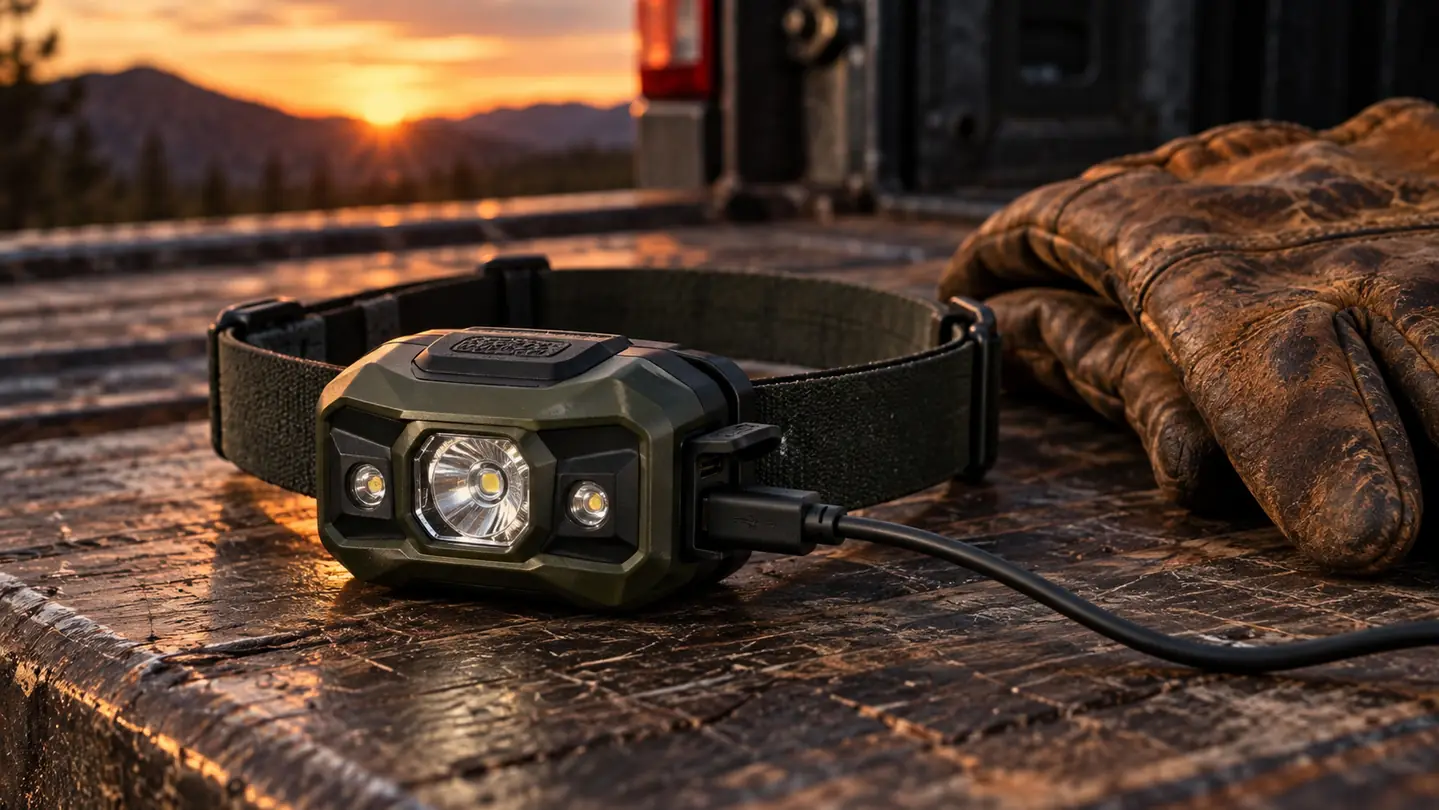
The biggest reason I reach for the LHKNL is how easy it is to charge. Petzl has moved a lot of its lights to internal batteries that need a charger from the same brand. That system is clean until you leave the charger at home. The LHKNL has a USB-C port under a small rubber cover, so I charge it with the same cord I use for my phone. On the drive from one drainage to the next, I plug it into the USB outlet in my 2016 Tundra or into the power bank I keep in my pack. By the time we stop to glass a ridge, the light is full and I never packed an extra cable. That convenience is the reason the LHKNL stays in my truck all year.
I also like how much abuse the LHKNL will take. In November, during rifle season, I caught the light on a low branch while I was walking down a rock slope. It came off my head, bounced twice, and landed in the dirt maybe fifteen feet below. I was sure the plastic housing was cracked. I picked it up, snapped the strap mount back into place, and hit the button. It lit on the first press. I ran it the rest of the hunt and it never missed a beat. The Petzl is tighter and better made, but I would not want to drop it that distance. A few extra ounces of rubber and plastic are worth it when your gear lives in the bed of a truck.
Comfort is another area where the LHKNL wins, but only in the right conditions. The strap is wider and has a grippy backing, so it stays put when I wear it over a wool cap in January. The Petzl strap is thinner, which is good for warm weather, but when I wear a rain hood or a slippery beanie the light slides sideways. I have caught myself pushing it back into place a hundred times on a rainy evening of bass fishing at Willard Bay. That gets old fast when your hands are cold and wet.
I also give the LHKNL the nod on controls for winter. The main switch is one large button under a rubber cover, easy to find with insulated gloves. I can click through modes without pulling off a glove or turning on every light in my pack. The Petzl switch is precise, but it is a smaller button and it has a different feel. On a below zero morning at Pineview I have hit the wrong mode more than once with mittens on. Control layout does not show up on a spec sheet, but it shows up every time you use the light.
The LHKNL is also the easier light to live with around water. The rubber port cover keeps the USB-C socket dry when I am netting trout in the rain. I have had it splashed twice at Willard Bay and never seen it flicker. The Petzl is simpler on the outside, but some of the models I have used have more exposed charging contacts. When you are standing in the rain with a fish on the line, the last thing you want to think about is whether a little water is going to reach the electronics.
The LHKNL is a flood light at heart. When I hang it from a branch over the tailgate, it lights the whole work area instead of making a small bright spot. For cleaning fish, sorting gear, or cooking breakfast before daylight, that wide wash is more useful than a tight spot. I can hang the light low and still see the entire tailgate. That is the kind of practical benefit that does not show up in a catalog, but it shows up every single morning in camp.
Where Petzl Wins
Where the Petzl has the edge is the beam itself. The LHKNL gives you a broad, even wash, but the center of the beam has a slight hot spot and the edges fall off fast. The Petzl beam is smoother, with a gradual transition from center to edge. On a rocky trail above Causey Reservoir, that difference showed up every few steps. The Petzl made it easier to tell whether that dark shape was a shadow or an opening between rocks. When you are walking out after a long day, seeing depth matters more than seeing width.
Petzl also wins on size and weight. The LHKNL is not huge, but after an hour it feels like it is sitting on your head. The Petzl hugs the skull, rides lower, and I genuinely forget I am wearing it. Several times this fall I had to reach up and touch the light to check whether it was still there. If your headlamp work is mostly walking, not cooking or cleaning fish, the Petzl is much easier to live with on a four mile night hike.
The low battery warning is the Petzl quiet advantage. The LHKNL will run on high until the meter suddenly drops, and when it is cold that last bar can disappear fast. The Petzl drops to a dim, steady mode and stays that way long enough for me to get back to the truck. One night in January I walked off the ice at Pineview with the Petzl in dim mode for the last half mile, and it never blinked out. I trust a light that tells me it is about to quit.
Build quality is another reason the Petzl costs what it does. The casing is tight and smooth, the switch is crisp, and the lens is easy to clean. There are no rattles after a year of use. Petzl has a long history in climbing and caving, and that refinement shows in the little details. You are not paying for raw output alone. You are paying for tolerances and a beam that has been designed properly.
Some people will choose Petzl for the name, and that is not a bad reason. Petzl has been making climbing and caving gear for a long time, and they know how to design a light that works when your life depends on it. The LHKNL has a shorter history and a lower price, and for many of us that is part of the appeal. You have to decide whether a long track record is worth the extra cost. Both lights are good enough that the decision will not keep you awake at night.
For a truck light that takes a beating, pick the LHKNL
This is the headlamp I keep in the center console between seasons. Check today's price on Amazon and read what other owners say about charging and battery life.
Amazon Check Today's Price on Amazon →Who Should Buy Which
Buy the LHKNL if this is going to be the one headlamp you own, or the one that lives in the truck. It handles a September elk camp, a rainy October deer camp, a January night on the ice, and a spring evening on the Weber without complaint. It charges from a common cord, takes a beating, and you will not feel sick when it gets scratched. I like that it is a workhorse.
Buy the Petzl if you want a dedicated walking light. It is smaller, it weighs less, and the beam is better suited to the uneven ground you cross on a night hike. If you already have a good camp light and need a second light for when you are on foot, the Petzl is worth the extra money. I have both in my gear closet, and I grab them for different jobs.
Do not buy either one if a cheap single mode light will do the job. For reading in the tent or finding the bathroom at 2 a.m., a basic headlamp is enough. Buy a better light because you will actually use it. I use these two more than almost any other gear I own, and that is the real test.
One more thing: the right answer can change with the season. In September, when I am walking into elk country before daylight, the Petzl rides on my hat because it is light. In November, when the light has to survive a week in the truck, the LHKNL is the one I grab. If you have room for only one, count your hunts. More time at camp means LHKNL. More time walking in the dark means Petzl.
A final honest note. No headlamp is perfect, and these two are close enough that you will not be disappointed with either one. Pick the LHKNL if value and convenience win your argument and you can live with a slightly heavier light. Pick the Petzl if smooth beam and weight are worth the extra cost. Both have a place in my truck, and after two seasons I would not call either one a mistake.
One last way to think about it: the LHKNL is a tool you can grab without thinking. It does not need its own charger, it does not mind being tossed into a pack, and it is not so expensive that I worry when it gets a scratch. The Petzl is a precision tool that deserves a place in my gear for night walks, but it is not the first thing I grab at 4:30 in the morning when I am loading the truck.
Give the LHKNL a spot in your truck
After sixteen months, this is still the headlamp I reach for first. See today's price on Amazon and decide for yourself.
Amazon Check Today's Price on Amazon →