

I have cleaned more fish than I can count, enough that my thumb knows where the gill plate sits before my eyes catch up. For years I did it all with a hand fillet knife, and that worked fine. Then my hands started complaining halfway through the third walleye, so I started looking at electric knives the way a mechanic looks at a grease gun. Not exciting, but honest work. When the Bubba Pro Series lithium ion cordless fillet knife showed up, I told myself I would use it for a full season before I said a single word about it in public. That season is over now. This is what I learned, including the parts that the product listing leaves out.
People at the cleaning table ask one question before anything else: does an electric knife actually save time? The answer is yes and no. It saves your hands more than it saves the clock. A sharp hand knife is still hard to beat for one single fish. But hand a guy a stringer of twenty trout and tell him to get them ready for dinner, and the electric knife wins. It can run all day without a dulling blade, and it keeps your wrist from locking up by the tenth fish. That is the reason it stays in my truck, not because it is fancy.
The Quick Verdict
The Bubba electric fillet knife is a hard working tool for anyone who cleans fish in numbers. You need patience for the learning curve, but once it clicks, it saves your hands and your time every trip.
Amazon Check Today's Price →Tired of your hands cramping on the tenth fish?
The Bubba Pro Series electric fillet knife handles a full stringer without the wrist fatigue of a manual blade. See the current price on Amazon and decide for yourself.
Amazon Check Today's Price on Amazon →How I Put It to Work
The knife came out of the box in early April, right before trout opener on the Weber. I charged it, ran it over a couple of bluegill from a local pond, and then put it in the back of my 2016 Tundra with a tow strap and a gas can for company. That truck has 190,000 miles on it, and whatever rides back there gets treated rough. The hard case took some scuffs, but the knife stayed protected. The next real test was a stringer of fresh run trout on opening morning, when the water was still cold enough to hurt your hands by the time you cleaned fish.
By the time I put the boat away in the fall, the Bubba had cleaned somewhere north of seventy fish. I stopped counting after that because I no longer needed to prove anything to myself. It handled trout from the Ogden, smallmouth bass from Willard Bay, and a mixed cooler of walleye from Pineview. Most of that work happened on a cutting board across the tailgate, in rain and heat, with Ruby the chocolate Lab sniffing around my boots. She never once got hit by the blade, and that is about the best review a dog can give a knife.
The first thing I learned is that the knife prefers fish that fit the blade. I tried it on panfish and it was too much tool, no way around that. On a twelve inch bluegill, the motor runs and the blade overworks the fillet. But on a two pound bass or a big lake trout, it is exactly right. If you mostly chase panfish, this is the wrong knife, and I will say that plainly. If you keep bass, walleye, trout, or fish that hit the cooler in numbers, the Bubba starts to make sense.
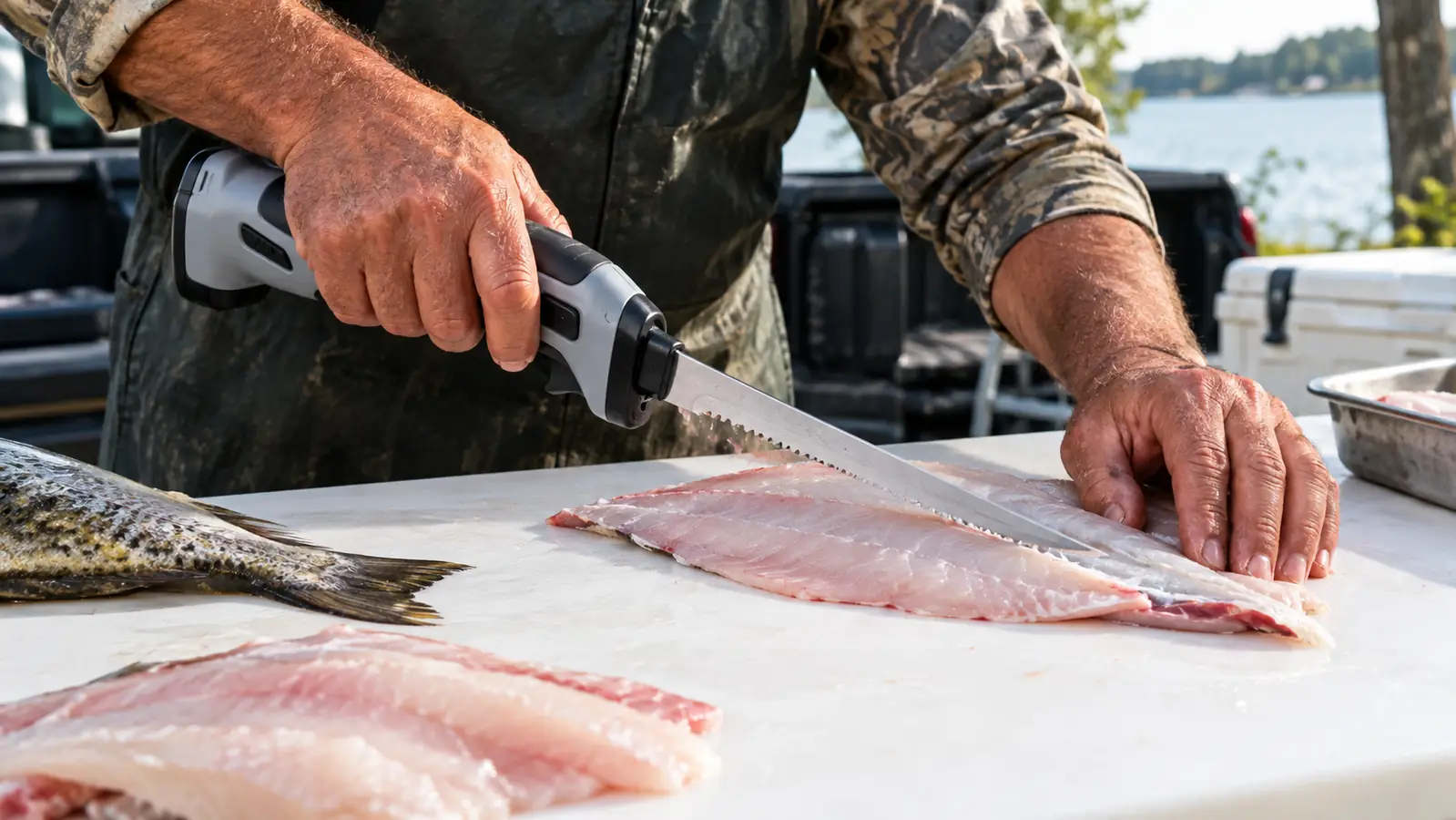
One afternoon in late June stands out. I had been trolling for smallmouth on Willard Bay with a friend, and we came back with a limit of fish that were not huge but were covered in mud and slime. The fillets had to come off fast if I wanted them for the grill. I set up the board on the tailgate, ran the Bubba at just over half speed, and cleaned all fourteen fish in under twenty minutes. My friend did the last two with his hand knife to compare, and he was not done when I was rinsing the board. That is the kind of concrete proof that matters more to me than any spec sheet.
What the Bubba Does Well
The motor is the reason I kept it. My old electric knife started strong and slowed down once it hit a rib cage. The Bubba holds its speed. When I run the blade down the backbone and roll it along the ribs, the motor does not bog, and the fillet comes off in one clean piece. I went from patching up three or four cuts per fish to one smooth pass. For a guy who fills a freezer, that is not a small thing.
The second thing is the grip. The handle is shaped so your fingers do not have to squeeze hard to hold it steady. After an hour of cleaning fish with my old knife, my hand would cramp. With the Bubba, my hand stayed loose and I felt like I had control the whole time. A wet fish covered handle can get slick, but this one did not twist in my grip even when I was rinsing fillets in the lake.
The blade release is another place where the design earns its keep. When the blade starts to dull halfway through a day, I can swap in a fresh blade without putting down the fish. I do not have to carry a sharpening steel to the cleaning station. The used blade goes back in its sleeve until I get home, and a clean blade finishes the job. It is an easy system and it worked every time.
The other place this knife showed its worth was on cold fish. If you catch trout in early spring, the fillet meat feels almost stiff until it warms. A hand knife will drag and tear on that meat. The electric blade moves fast enough to cut through without grabbing. I cleaned a limit of cold water trout one May morning when my fingers were still numb, and the knife did not care. That is the kind of task where a motor earns the space it takes in the truck.
What Nobody Tells You About Electric Fillet Knives
Here is the part the sales copy ignores. Your first fish with an electric fillet knife will probably look terrible. I am not exaggerating. My first trout on the Bubba came off in three chunks because I tried to push the blade through the fish the way I would push a manual knife. You cannot do that. You have to let the blade ride along the backbone and guide it, not force it. Once that clicked, my fillets came out cleaner than almost anything I had done by hand in years.
An electric knife is also louder than a hand knife. It is not deafening, but it whines, and that whine carries across a quiet dock. If you clean your fish close to a campsite before sunrise, you will wake somebody up. I do most of my work at the tailgate after the boat is loaded, so it does not matter to me. It might matter to you. Keep it in mind before you buy one for a backcountry trip.
The trigger is not a simple on-off switch. It has a staged pull, so you can run the blade slow for small fish or full speed for bigger ones. That is a good thing, but it takes practice. I spent my first half dozen fish squeezing the trigger all the way to the stop, and the fillets came out thin and ragged. Once I learned to ease off, the cuts got cleaner. Give yourself an afternoon to retrain your hand.
Battery life is fine, but it is not infinite. I learned that the hard way once when I left the knife running while I talked to the guy at the next truck. It ate enough charge that I had to finish the last walleye with my hand knife. Since then I switch the Bubba off between fish. With that habit, the included battery has never let me down in the middle of a batch.
Fifth, the cleanup is not as simple as a hand knife. With a manual blade, I wipe it down and put it away. With the Bubba, I have to be careful around the motor housing. I take the blade out, rinse it, and dry it. I wipe the handle down with a damp rag and let it air out with the battery off. It has held up fine, but you cannot throw the whole knife in a sink of soapy water like you would a fixed blade. It takes an extra three minutes after every trip. Some people mind that more than others.
Battery and Blade Realities
The lithium ion battery charges in about two hours, though I never sat there with a stopwatch. I plug it in the night before a trip and it is ready by the time coffee is done. The charger plugs into a normal wall outlet and the cord is long enough to reach from a garage outlet to the counter. It is not a huge accessory, which I appreciate because it lives in the same case as the knife.
How many fish can you clean on one charge? That depends on how you use the trigger and whether you shut the motor off between fish. In my experience, I cleaned a limit of trout around twenty fish and still had power to spare. I also cleaned a cooler full of bass in one sitting, maybe thirty fish, and the battery was low but it made it to the end. Charging it the night before is the only real rule.
Blades eventually dull, no matter what anyone says. After a full season of hard use, the blade that came with the knife still cuts, but it is not as sharp as it was on day one. I keep a small sharpening steel in the truck and run a few passes over the edge every couple of trips. That has kept the fillets clean and stopped the knife from tearing the meat. A dull blade is the most common reason people give up on any fillet knife, electric or not.
Replacement blades are part of the long term cost, and I recommend buying a spare when you buy the knife. That way you are never stuck with one dull edge on a busy day. I keep mine in the truck, in the same hard case as the knife. It does not take up much room and it has already saved a trip when I hit a toothy northern pike and rolled the edge early in the day.
The Pros and Cons
What I Liked
- Motor keeps its speed through ribs, so fillets come off cleaner
- Cordless design lets you clean fish away from an outlet
- Grip stays secure with wet hands
- Blade changes in seconds
Where It Falls Short
- There is a real learning curve; your first few fish will be rough
- Heavier than a hand fillet knife, so it is not for tiny panfish
- Motor whine is noticeable on a quiet dock
- You have to remember to switch it off between fish
The day that sold me was a hot June afternoon when I cleaned fourteen bass at Willard Bay and my hands still felt steady enough to tie a fly afterward.
Who This Is For
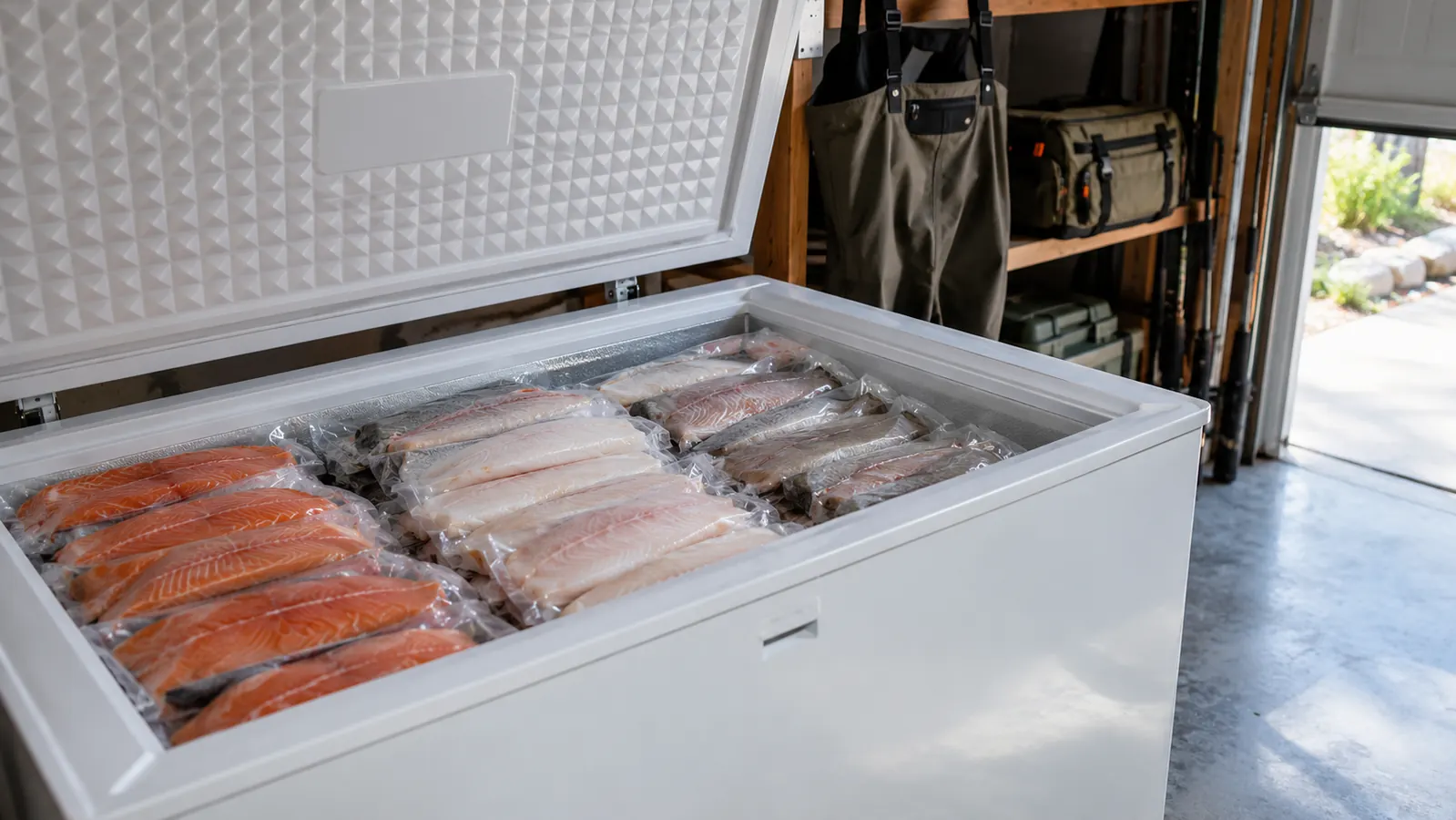
The Bubba is for an angler who cleans fish in batches. It is for the guy or woman who comes home with a legal limit after a good morning and still has to make dinner. It is for anyone whose wrists and hands have started to complain after a season of bending over a cutting board. If you freeze fish for the winter, this tool will get you through a big day without wearing you out. That is the group it was made for, and it serves them well.
It is also for someone who cleans fish where there is no power. I have used it on a sandy bank of the Weber, on the tailgate at a county ramp, and on a picnic table under a cottonwood. No extension cord, no generator, no leaning over the side of the boat to reach an outlet. That freedom is worth more than the extra cost to a person who fishes remote water.
Who Should Skip It
If you keep a dozen trout every summer and your hand knife still feels sharp, do not buy this. You will not get your money's worth out of it. It is heavier than a hand knife, it needs to be charged, and it takes up real space in your truck. For small panfish, it is the wrong tool altogether. I still clean bluegill with a cheap steel knife and a steady hand because it is faster for little fish.
I would also tell someone who is not willing to practice to pass. The learning curve is short, but it is real. If you try it once, get frustrated, and throw it in a drawer, that is money wasted. The knife rewards an afternoon of attention. If you can give it that, it will earn its place. If you cannot, stick with the knife you already know.
Ready to make cleaning day easier?
The Bubba electric fillet knife is the tool I reach for when the cooler is full and my hands need a break. Check the current model on Amazon and see if it fits your season.
Amazon Check Today's Price on Amazon →