
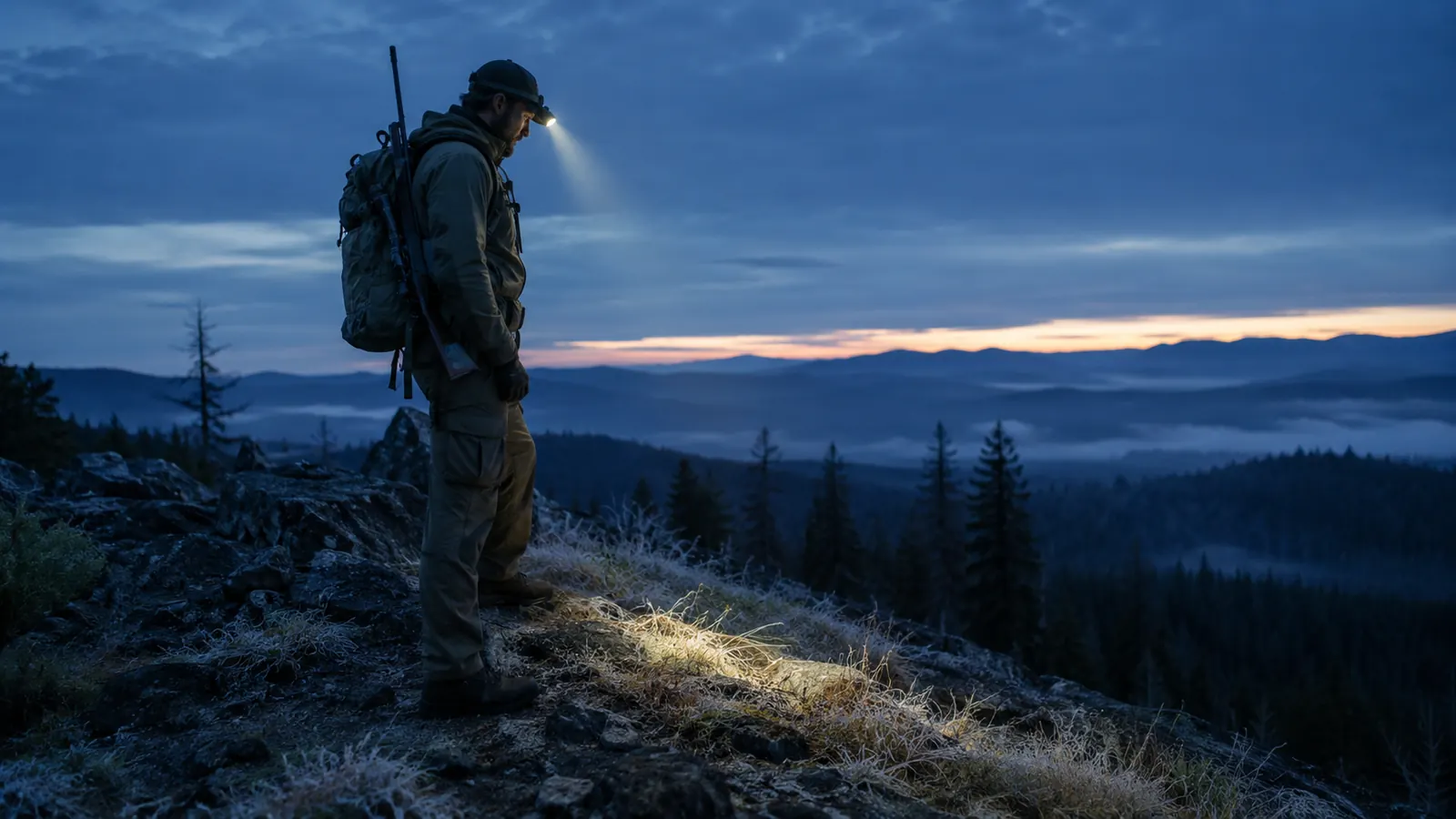
Most of a hunt happens in the dark. You park the truck, pull on your boots, and start walking before the sky does anything. If your light is weak, or your battery gives up at twenty degrees, or the beam bounces off every branch and you cannot see the trail, the whole morning starts wrong. I have walked into elk country with a light that weighed almost nothing and lit almost nothing, and I have stood next to the truck at 4:30 in the morning holding a dead lamp, wondering how many more times I would let that happen.
I am Emmett Prosser. I live outside Ogden, Utah, and I have hunted mule deer and elk on public land for more than thirty years. After a full season on my hat, the LHKNL headlamp is what I reach for now. Here is how to choose a headlamp for early morning hunts, one decision at a time.
The walk in sets the tone for the whole day
It is easy to treat the headlamp as an afterthought. The rifle is scoped, the boots are broken in, and the pack has been loaded and unloaded a dozen times. Then the alarm goes off at 3:30, and the first thing you reach for in the dark is the light on the seat. If it works without drama, the morning feels easy. If it does not, you start the hunt already behind.
I have gone through more lights than I care to remember. The ones that died were never the expensive ones or the cheap ones in any tidy pattern. They were the ones I had not thought about until I needed them. Choosing a headlamp the same way you choose your boots, with an eye to the country and the season, is what separates a light you own from a light you fight.
Start with a light you can trust in the dark
The LHKNL headlamp is the one I leave the truck with after a full season on my hat. It is rechargeable, simple to run in gloves, and honest about run time. It will get you to your spot and back.
Amazon Check Today's Price on Amazon →Step 1: Pick the form that fits the job
Start with what your hands need to do. In the dark you are unlocking a gate, buckling a safety strap, holding a trekking pole, reading a map, or bracing yourself on a steep sidehill. All of those need two free hands. A handheld flashlight forces you to choose between seeing and holding on, which is a good way to take a fall. The lamp belongs on your head, where it points the moment you look. That sounds obvious, but plenty of hunting lights are really running lights with a strobe mode you will never use.
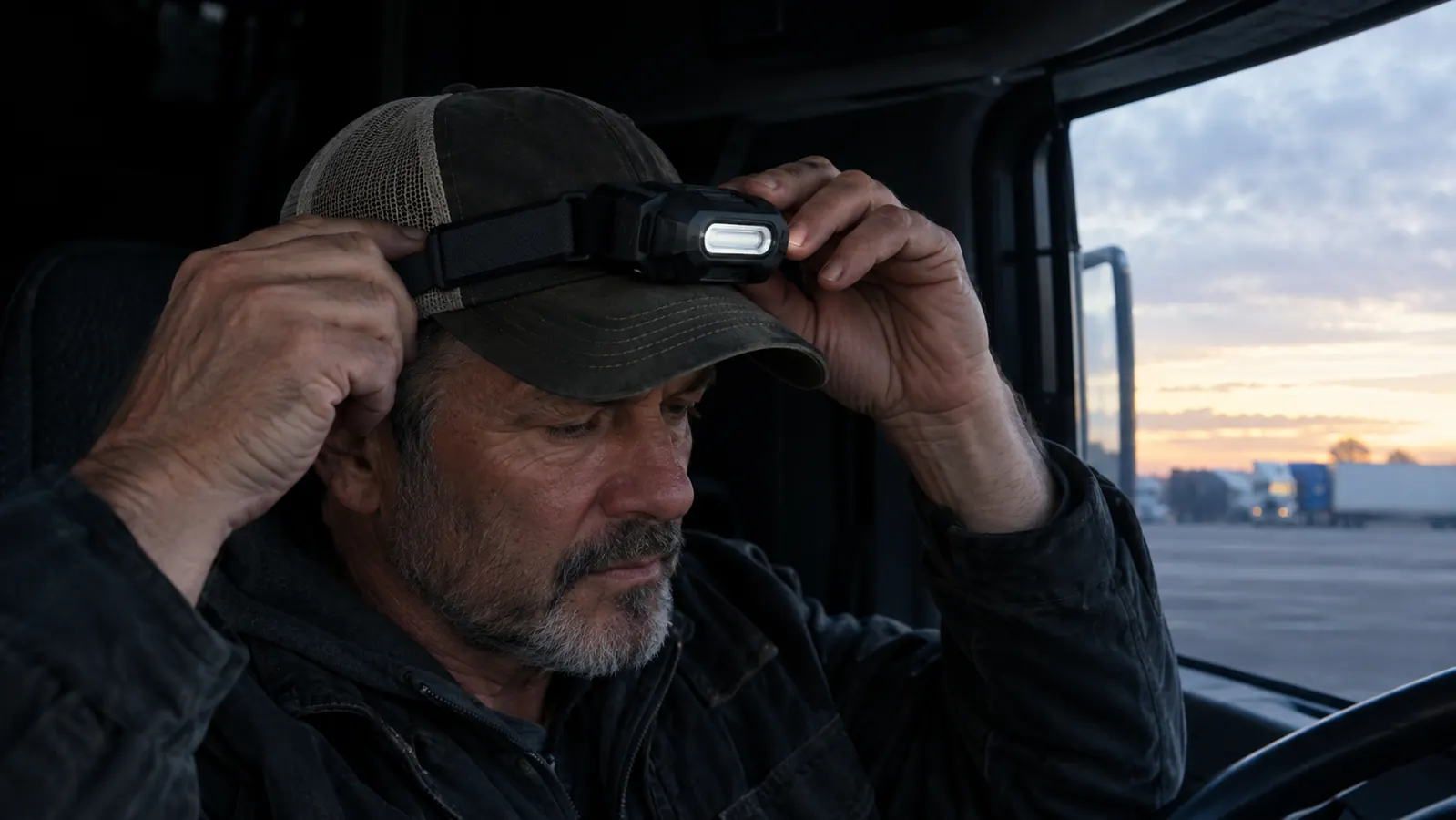
There are lights that clip to a hat brim and lights that hang from a tent loop, and they have their place in camp. For walking in before daylight, you want a strap headlamp that sits on your forehead and stays put when you lean, climb, or look down at your boots. The LHKNL headlamp is a simple strap light with the lens up front, no dangling cord, and no separate battery pack to catch on brush. That is the right shape for this job.
Weight and balance matter more than the box suggests. A heavy lamp will make a good wool cap sag and will slide down your nose on the first steep climb. Thin elastic straps stretch out within a season, so look for a strap that keeps its grip and a lamp that does not roll forward when you are bent over. You will wear this from the truck to the stand and back, for years of early mornings, so comfort is not a luxury.
Step 2: Size the battery for the cold
The first number to settle is runtime, not brightness. Count the whole trip: a forty-minute walk in, a sit until shooting light, and the walk out in the dark if you stay until last light, plus ten minutes of work at the tailgate. I want four honest hours on a setting I actually use. A lamp that goes dark on the way back to the truck is worse than no lamp at all, because with no lamp you plan for the dark and with a dead lamp you just get surprised by it.
Cold is what kills cheap lights. Batteries sag as the temperature drops, so a bargain light starts to fade right around freezing, exactly when you are standing on a frosty ridge looking for a trail marker. Rechargeable lamps with decent cells hold up far better in the cold, and they save you the drawer of half-dead batteries every hunter seems to own. The LHKNL headlamp charges over USB, so I top it off at the tailgate with a small power bank and never wonder whether the spares in my pack are fresh.
Own the charging habit, because a rechargeable lamp stored dead all summer can lose its ability to hold a charge. Charge it before the season and again before a long weekend, and you will not be the guy standing at the truck with a lamp that blinks twice and dies. For a week-long backcountry hunt with no power, bring a power bank or pick a lamp with a removable cell. For the way most of us hunt, a USB lamp and a tailgate charge is enough.
Step 3: Choose brightness for the trail, not the spec sheet
The lumen number is the easiest thing to overspend on. A big figure looks great on the box, but full power drains the battery fast and lights up every bit of dust between you and the trail. What you actually need is a high mode for the moments you need it, a genuine low mode that protects your night vision, and a middle setting you can live in for hours. I would rather have a light that does three settings well than one that lists thirty modes and hides the one I need three menus deep.
For walking in and for working on a deer at the tailgate, I have never needed more than the normal mode on the LHKNL headlamp. The controls make sense at 5 a.m., which is the whole ballgame: one press gives trail light, and the low setting is low enough that I can read a map without ruining my eyes for the walk. A light that makes you cycle through blinking modes to reach a plain beam is a light you will end up leaving in the truck.
Buy brightness for the job, not for the package. A lamp that runs all morning on a sensible setting beats one that lights a field for ten minutes and then fades to nothing. When you read reviews, look for what owners say about run time on the middle setting, because that is the number that tells you what a real morning with the light is like.
Step 4: Match the beam to the country you hunt
Now think about the beam shape for the country you hunt. A flood beam spreads wide and close, which is right for camp chores, reading a map, or working in the brush. A spot beam reaches across a meadow or down a trail. Most of us need something between the two: a soft center and enough reach to pick out the trail junction or a reflective marker ahead. The beam shape is a design choice, so pick the country first and the light second.
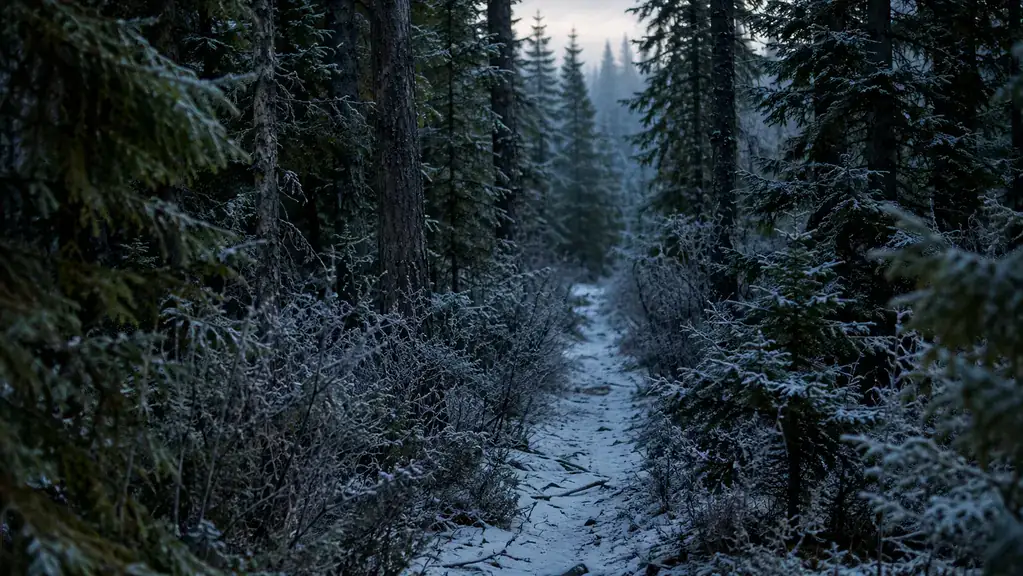
I hunt timber and canyons outside Ogden, where the trails are narrow and the branches hang low. A hard-edged spot beam lights up the brush right in my face, so I prefer a beam that stays even across the whole trail with just enough reach to see the turn. The LHKNL headlamp gives me that kind of even light, and it is easy on the eyes after a long day of staring at snow or water. Honest, wide, and settled: that is what I want on the walk in.
Be careful with lights that claim to do everything. Zoom heads and extra lenses mean more parts to freeze up or break, and a broken zoom is just a broken light. I would rather have one even beam that does the walking job well and a small handheld flashlight in my pocket for the rare times I need distance. Keep the tool simple and it will keep working.
Step 5: Test it on the hat you hunt in
Try the lamp on the hat you will actually wear. A strap that fits snug on bare skin will sit loose over a cap, and loose means it bounces with every step and slides down your forehead when you look down. The lamp should sit steady just above your eyes, with some adjustment left for the days you wear a thicker layer. If you plan to wear it over a ball cap in October and a wool cap in November, try both before you decide.
Run every control with your gloves on before you buy. Cold fingers cannot find a tiny switch, and fumbling at the trailhead is how lamps get dropped and lost. I adjust mine at the tailgate before I leave, and I have had no trouble working the LHKNL headlamp with a gloved hand. A light that is awkward to switch off will get left on, and that costs you battery and night vision both.
Last, treat it the way you will actually treat it. Throw it in the pack on top of a wet coat, let it rattle against the thermos, drop it in the bed of the truck and forget it until next weekend. A hunting headlamp has to survive being handled like hunting gear, not like electronics in a padded case. If you find yourself being careful with it, you bought the wrong tool.
What Else Helps
A headlamp is the foundation, not the whole system. I keep a small spare light in my pack in case the main lamp dies, and I charge the main lamp at the truck so it is ready when I reach for it. Learn your route in daylight before you trust it in the dark, because no lamp will fix a trail you never scouted. When you are near other hunters, cup your hand over the lamp or turn it off, because a bright beam carries a long way in dark timber.
The LHKNL headlamp is not the most expensive light you can buy, and I consider that a point in its favor. Simple gear that works every time is worth more than complicated gear that works when it wants to. Choose well, charge it the night before, and the early morning stops being a scramble and becomes the best part of the hunt.
One more habit is worth adopting: charge the lamp while you are getting ready the night before, and keep the cord in the glovebox. A lamp that is charged and ready means you are not standing at the truck at 4:30 a.m. waiting for it to charge. These small routines cost a minute and save a morning.
It has been on my hat for every early morning of archery season and rifle season, and it has never once gone dark on the walk out.
The headlamp that rides to the truck with me
If you are choosing a headlamp for early morning hunts, this is the one I would order again. Rechargeable, simple controls, even beam, honest run time, and it takes the same abuse the rest of your gear takes. Put it on your hat for one September morning and the argument is over.
Amazon Check Today's Price on Amazon →