
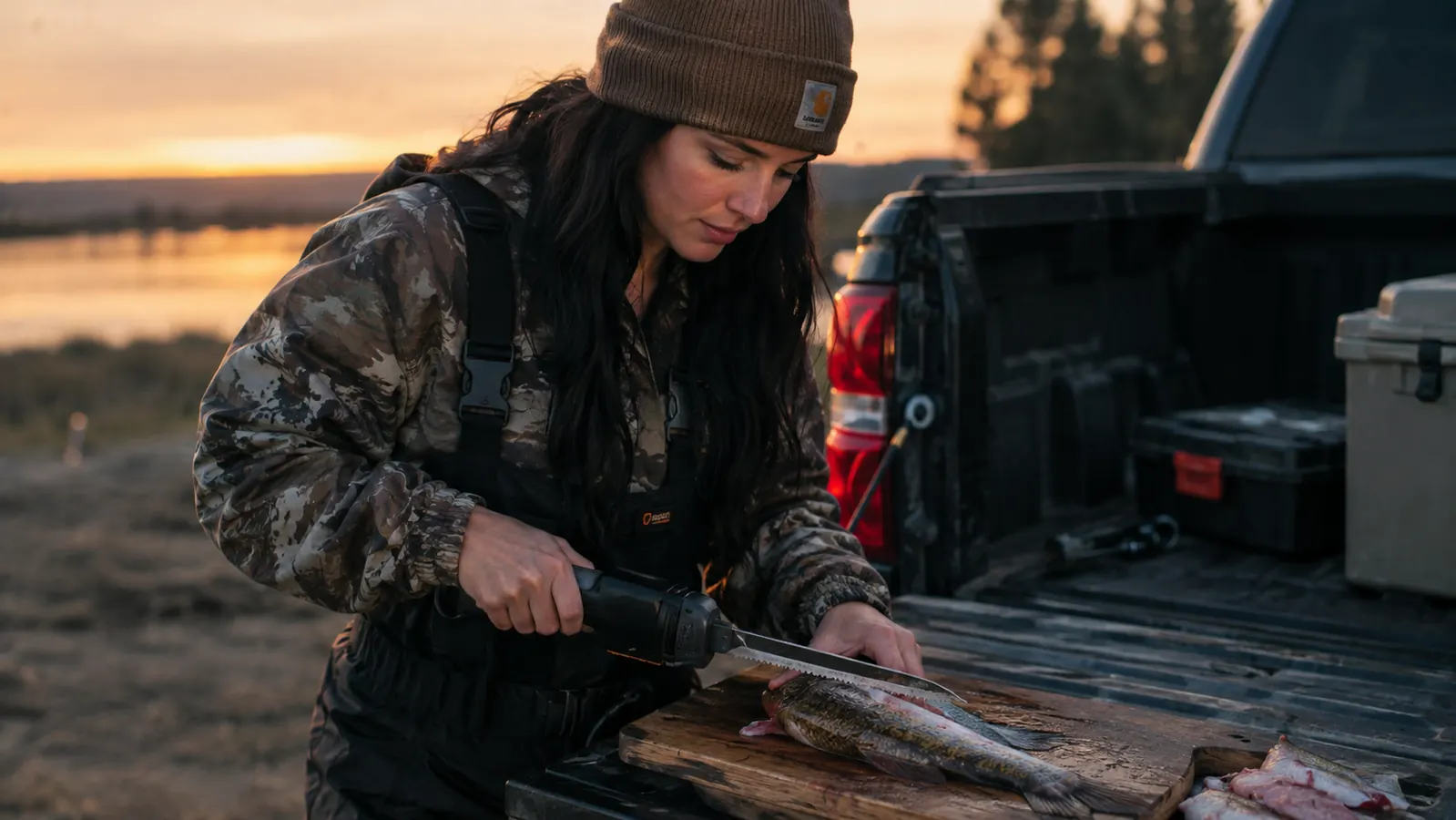
I have cleaned a lot of fish on tailgates in the dark. Twenty years as a heavy equipment mechanic gave me hands that do not quit easy, but a cold night and a dozen trout will find the weak spot in your grip. For most of my life I used a regular fillet knife, the same kind my father used. Then my right hand started cramping partway through the third fish, and I decided there had to be a better way.
The Bubba Pro Series Lithium-Ion Electric Fillet Knife is the one that finally made sense to me. It is not a toy and not a gimmick. It is a serious tool with a non-slip grip handle, a stiff blade, and enough battery to clean a cooler full of fish without stopping. I have used it through three seasons on the Weber, the Ogden, and Willard Bay. Here is how I fillet fish fast with it, step by step, the way I do it on my tailgate.
Do your wrist a favor before the next limit comes in
If you clean fish more than a few times a year, an electric fillet knife takes the strain out of the work. The Bubba Pro Series is the model I grab when the water is cold and the fish are biting.
Amazon Check Today's Price on Amazon →Why I Made the Switch to Electric
For the record, I did not buy the Bubba Pro Series because I wanted another gadget in the truck. I bought it because I got tired of the ache behind my thumb after cleaning a limit of rainbows. The first time I used it, I noticed two things right away, the blade went through the fish with almost no pressure, and my hand was not the one doing the work. That sounds simple, but after twenty years of pushing a manual blade, it is a real shift.
The motor is smooth and the lithium-ion battery means there is no cord to snag on a tailgate. The non-slip grip handle does what the name says. Even when my palm is covered in fish slime, the knife stays where I put it. That matters more than any spec on the box, because a knife that twists in your hand is a knife that wastes meat.
I was slow to trust an electric knife. The one I tried twenty years ago felt like a dull saw, and its cord was always underfoot. The Bubba is different. The blade is narrow enough for a trout and stiff enough for a bass, and because it is cordless, I can use it on the boat, on the ice at Pineview, or on the tailgate without hunting for an outlet.
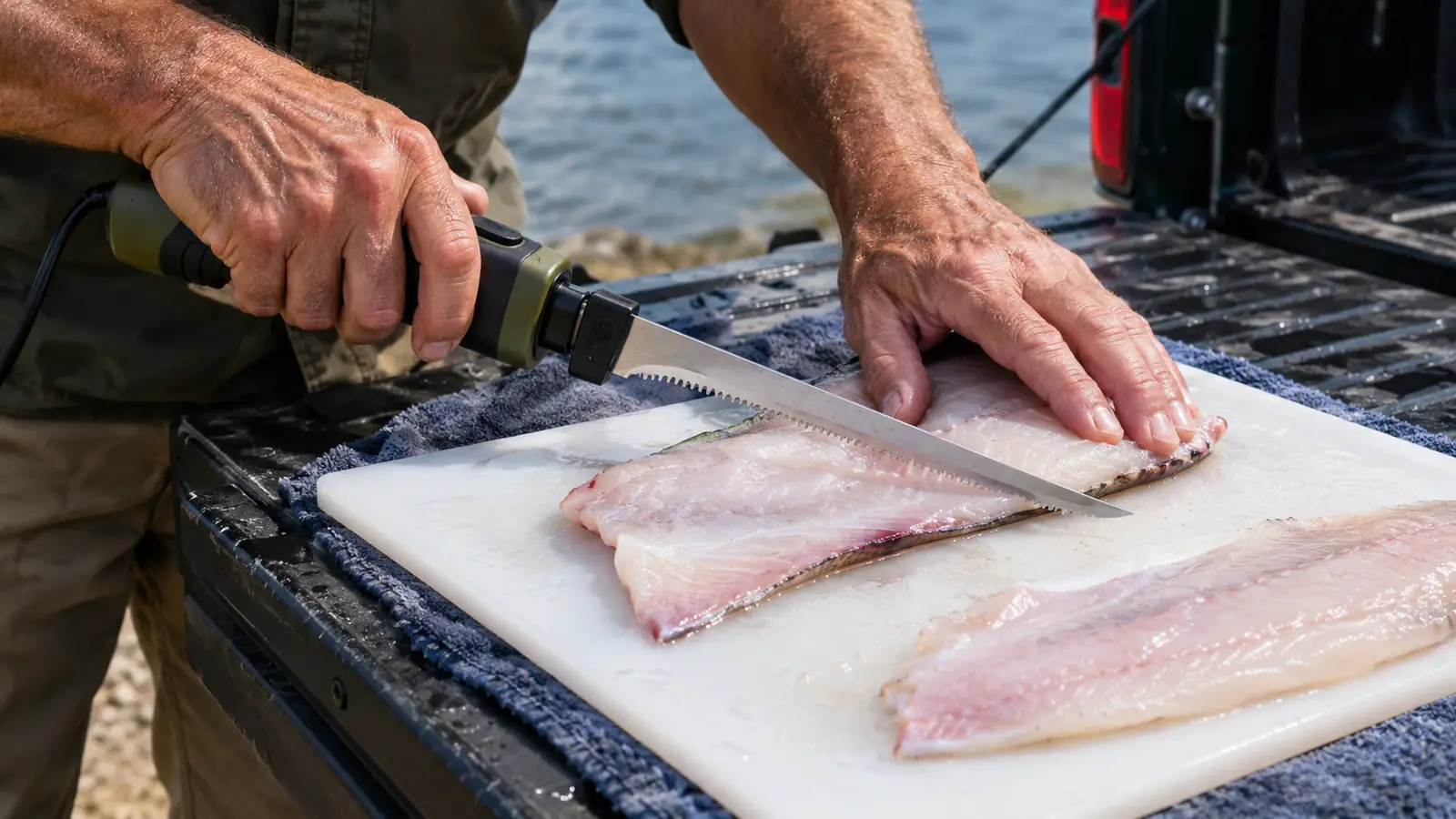
How I Fillet a Fish Fast with the Bubba Pro Series
Do not let anyone tell you there is only one way to run a fillet knife. The exact angle changes with the fish and the conditions. But after hundreds of fish, the steps stay the same. Clean a fish on the tailgate, keep the cuts long and smooth, and let the blade find the bone. Here is my order.
Step 1: Set Up Your Cutting Station Before the First Fish
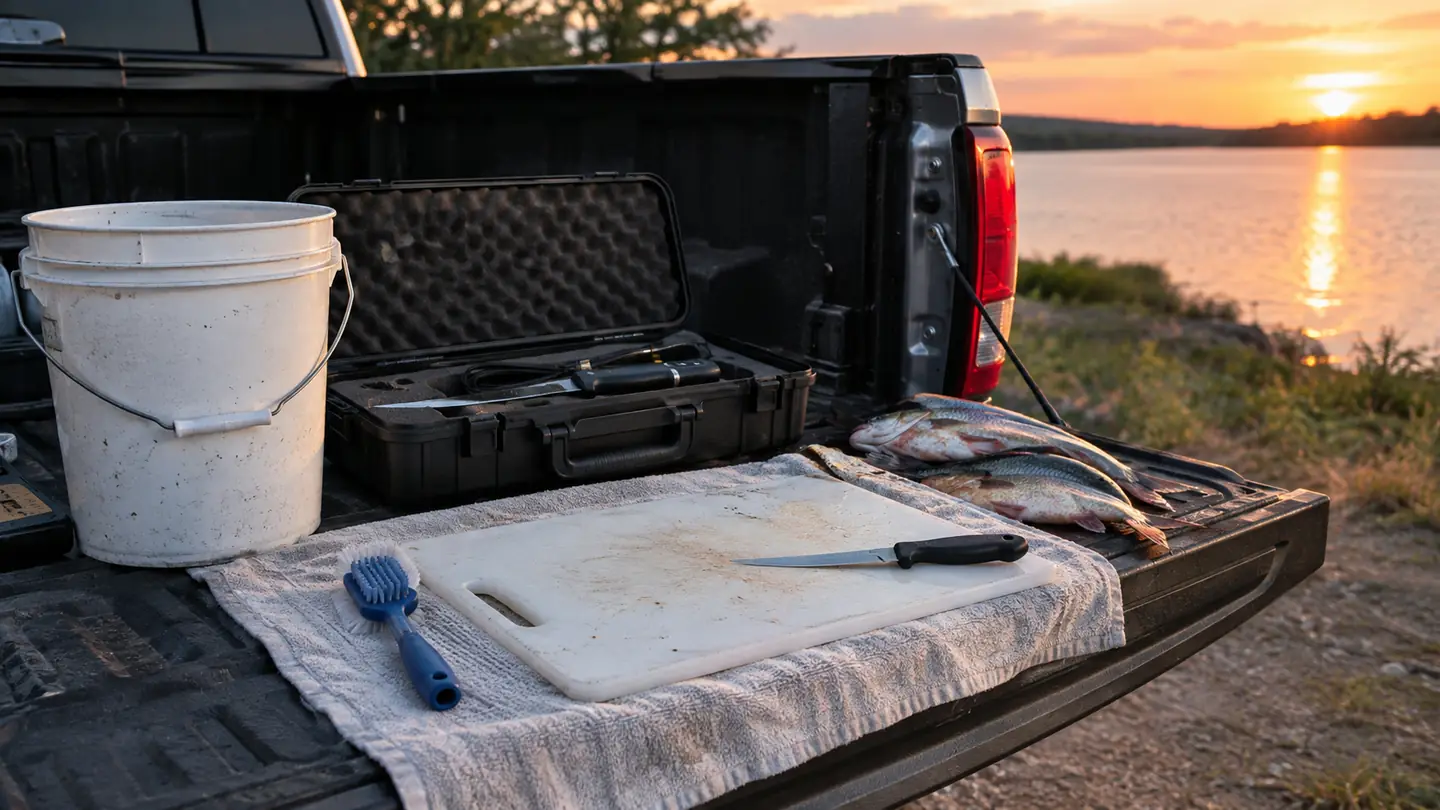
The fastest fillet jobs always start before the fish is even on the board. I learned that the hard way, standing in the dark with a headlamp, trying to find a knife with wet hands. Now I set the tailgate up while the rods are still in the water. A cutting board on a folded towel, a garbage bag in a bucket, a clean bowl for fillets, and a light pointed at the board. It takes two minutes and it saves ten on every fish.
The Bubba Pro Series comes in a hard-sided case, so the knife, a spare blade, and the charger have a permanent spot in the truck bed. I keep the case on top, not buried under a tarp. That also reminds me to check the charge before I leave the house. A lithium-ion battery this size cleans a full cooler of fish on one charge, but there is no excuse for showing up with a dead one.
Step 2: Make the First Cut Behind the Gills
Start with a cold fish on the cutting board. If the fish has been on ice, the meat is firm and the skin stays where it should. Lay the fish on its side, dorsal fin toward you, and find the soft spot right behind the gill plate. With the Bubba running, make the first cut there, angling the blade slightly down toward the backbone.
You are not sawing. You are making one clean entry cut. Once the blade touches the backbone, rotate it so the edge points toward the tail. That single motion opens the fillet along the spine. If the knife skips or jumps, the fish is too warm or the blade is dull. Cold fish and a sharp blade are the whole basis of the method.
Step 3: Follow the Backbone to the Tail
With the blade behind the gills, run it toward the tail, staying just on top of the rib bones. Keep the cut long and smooth. You should feel the ribs as a series of slight bumps under the blade. When you do, lift the edge a hair and let it ride over the curve instead of cutting through the bones.
This is where the stiffness of the Bubba blade really shows. A floppy blade dives into the meat and ruins the fillet. The Pro Series blade holds a straight line and tracks the backbone without me forcing it. On bass, the difference is obvious. The fillet stays in one piece from head to tail, and there is no furrow of wasted meat along the spine.
Do not cut through the skin at the tail. Leave the fillet attached there. That little flap of skin is the handle for the next cut, and it keeps the fillet from sliding around on the board.
Step 4: Separate the Rib Cage from the Fillet
Once the main cut is done, lift the fillet off the carcass and lay it skin side down on the board. You will see the rib bones as a dark line running down the middle of the meat. With the electric knife running, make a shallow cut just above that line and follow the curve of the bones toward the tail.
I work from the thick shoulder end toward the tail, and I let the blade do the steering. The ribs come away in one piece, and the meat on top stays clean. When you get this step right, you do not have to dig at the fillet with your fingernails, which is what I had to do for years with a manual knife.
Step 5: Skin the Fillet with the Electric Blade
Hold the skin at the tail end between your thumb and forefinger, skin side down on the board. Slide the running blade between the skin and the meat, keeping the flat of the blade against the skin. Then give the fillet a gentle pull. The electric blade does the cutting while the fillet moves, and the skin comes off in one strip.
Keep your free hand above the blade. The non-slip grip handle on the Bubba makes this safer because it does not twist when your fingers are wet. On a fresh, cold fish, you can usually skin the whole fillet in a single pass. If the skin tears, adjust the angle so the blade stays flatter against the skin. You will notice the difference on the very next fish.
Why I Still Carry a Regular Fillet Knife
Do not throw your old knife away. I still carry a manual fillet knife and a sharpening steel in the same bucket as the electric knife. A manual blade is better for small panfish, for trimming belly fat, and for portioning fillets before they go in the freezer. The electric knife is the workhorse for limits, not a replacement for every blade you own.
The rule I use is simple. If I am cleaning more than four or five fish, the electric knife comes out first. If it is a quick lunch break and one brook trout, I reach for the manual knife. Both have a place in my kit, and knowing which one to grab is half the battle.
What Else Helps
A sharp blade is everything, electric or not. I check the Bubba blade before each trip and swap in the spare when the cut starts to feel rough. A dull blade pushes meat around instead of slicing it, and that is how good fillets get ruined. I keep the blade dry between uses and store the knife in its case.
A folding board with a clip makes the work easier on a tailgate, but a damp towel under any board works nearly as well. I also carry a headlamp and keep a small towel hooked to my belt loop. The towel is out of the way, but I never have to look for it. None of this is fancy, and all of it makes the job go faster.
How Long the Battery Lasts in Real Use
The lithium-ion battery in the Bubba Pro Series has gone through every trip I have put it on. I clean anywhere from a dozen trout to a cooler of bass in an evening, and it has not run out on me yet. I charge it when I get home after a fishing day rather than waiting until the next morning. That small habit has kept me from showing up at the cleaning table with a dead battery.
Cold Water, Cold Hands, and a Clean Tailgate
Cold water and a clean tailgate go together. I keep a five gallon bucket in the truck bed and give each fish a quick rinse before it goes on the board. That washes away grit and sand that can dull a blade in a hurry. The last thing I want is to drag a piece of sand through a fillet and ruin the edge right before the last fish.
Cold fish also clean better. I keep every fish on ice from the moment it comes out of the water, even on cool mornings at Willard Bay. Warm fish have soft meat that tears under the blade. Cold fish hold their shape, which means longer, cleaner cuts and less meat left on the carcass.
A dozen trout used to leave my hand cramped and my back sore. With the Bubba Pro Series, I clean the same fish in about twenty minutes, and my hand feels fine when I stand up from the tailgate.
Try one before your next fishing trip
If you clean fish more than a handful of times each season, the Bubba Pro Series pays for itself in less shoulder pain and cleaner fillets. It is the tool that lives in my truck from April through January. See the current price on Amazon before you head out.
Amazon Check Today's Price on Amazon →