
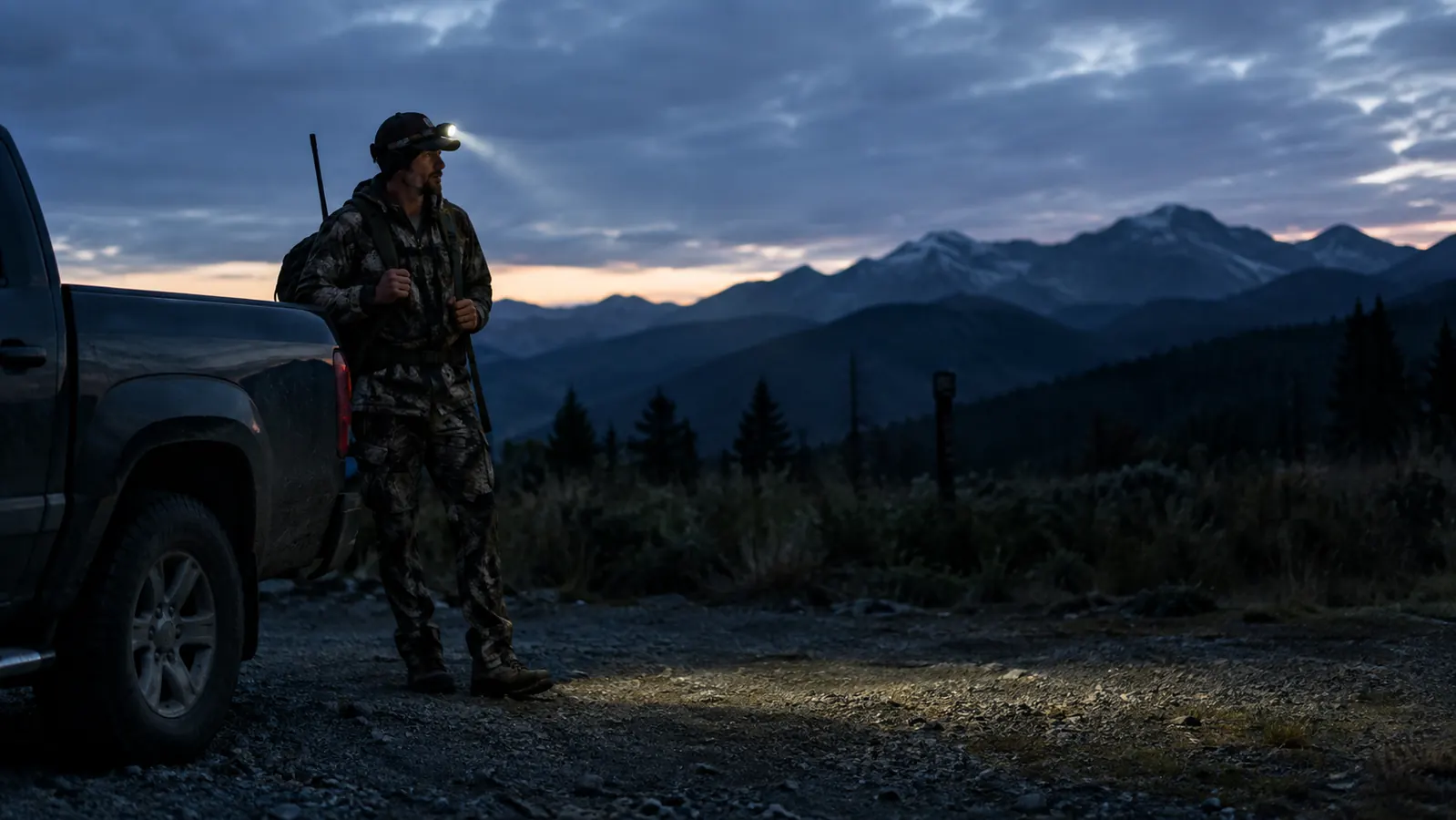
Buying a headlamp sounds about as complicated as buying a flashlight. Then you open the reviews, and every other one reads like it was written by somebody testing their very first headlamp. Bright. Comfortable. Great value. What those reviews do not tell you is what happens on the fortieth night, when the battery meter lies, the light drops to a weak emergency glow, and you are still a mile from the truck. I have carried the LHKNL headlamp since last March. It has bounced around the bed of my 2016 Tundra through a full trout season on the Weber, soaked through an archery elk scouting trip in September, and gone ice fishing with me at Pineview in January. Here is the honest version, the one that sounds like a guy talking over a tailgate instead of reading from a product page.
That honest version is not as tidy as a star rating. The LHKNL is a good headlamp, maybe a great one at its price, and it is also a poor promise in one specific way. The brightness is real and the beam is useful. The runtime figures on the box do not match what I measured on my own bench, the meter on the side tells you what the battery wants you to believe instead of what the battery is doing, and a week away from a wall outlet changes how you feel about it. Knowing all of that, I would still buy it again. I just wish somebody had told me the truth before that first morning I stood in the dark with a dead light and a long walk ahead of me.
The Quick Verdict
Good beam, honest value, dishonest battery meter. Buy it for the wide flood and the usable red mode. Do not buy it for the runtime numbers on the box.
Amazon Check Today's Price →The short version before the long version
The LHKNL is one of the most purchased headlamps on Amazon, and its 4.5 star rating across nearly 37,000 reviews is not an accident. Check today's price on the current listing, then read the full breakdown below, especially the battery section, so you know exactly what you are getting.
Amazon Check Today's Price on Amazon →How I've Used It
I am not a gear tester and I do not own a light meter. I am a retired heavy equipment mechanic, which means I trust measured results over claims on a box. When the LHKNL arrived last March, I charged it fully, set it on high, propped it against a toolbox in my garage, and let it run while I rebuilt a carburetor. It held a strong beam for a while, faded gradually over the final stretch, and shut off at 2 hours and 47 minutes. I wrote the number on the inside of the box lid with a grease pencil. The meter still showed two of three bars for most of that final hour.
I repeated the test on medium and on low, because that is how a person actually uses a headlamp. On medium it ran for more than twice as long as it did on high. On low I stopped watching after five hours because the light was still going strong and I had other things to do. That is the number that matters for most of what I do after dark, and it is the number the reviews never talk about. A headlamp that dies on high in under three hours sounds bad until you realize you will spend maybe ten minutes a night on high.
The real world matched the bench more closely than I expected. On a September scouting trip I left the truck at 5:15 in the morning and walked 1.8 miles up a two-track in the Wasatch. I started with the light in my hand because I was worried about bugs and about holding the beam where I wanted it, and that experiment lasted about a quarter mile. On my head, on low, it threw a pool of light wide enough to follow the ruts and miss the washouts, and the battery had not even started to fade by the time I reached the basin. That walk is when I stopped thinking about the headlamp and started just using it.
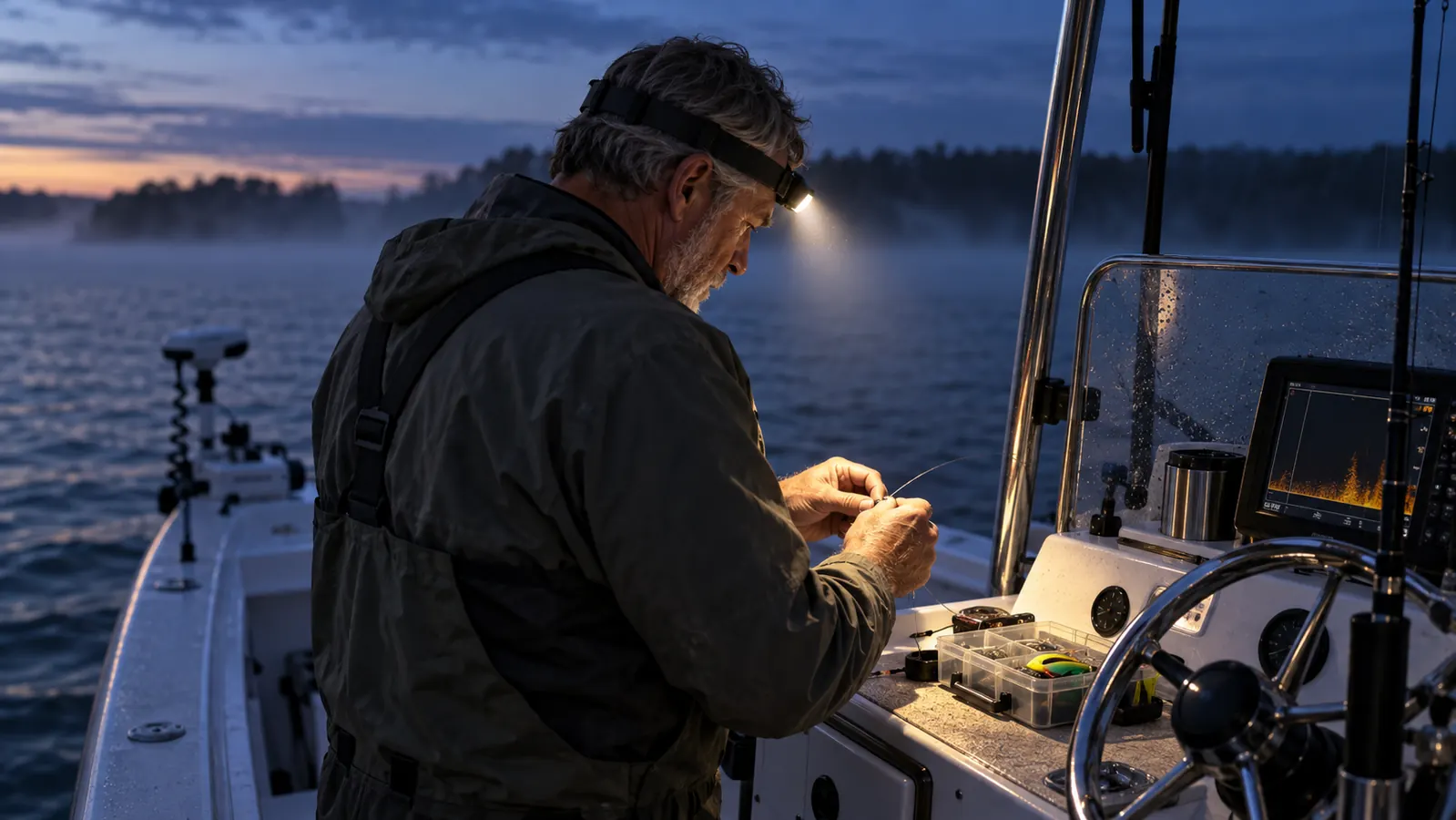
At Willard Bay before sunrise, the light did most of its work close in. Tying on a jerkbait, threading line through a rod guide, digging a hook out of a bass's lip. That close work is where this headlamp earns its keep. The flood is broad and even, without the harsh hotspot you get on cheap lights that makes it impossible to see what your hands are doing. My dog Ruby is steady in a boat and she has never once flinched at the beam, which is more than I can say for her reaction to my old headlamp.
The Battery Meter Is an Optimist
Here is what I wish somebody had told me before I bought it: the meter is an optimist, and the end comes faster than you expect. On my unit, two bars showing on the meter turned into a weak emergency glow in about twenty minutes. That was long enough to get back to camp, and it was not long enough to make me trust the meter afterward. The first time it happened I was standing at the tailgate of the Tundra trying to untangle a tippet in the dark, and I went from a solid beam to a dim glow before I understood what was wrong. I had planned to be done well before the battery ran out. I was not.
The fix is simple, but nobody tells you about it, so I will. Charge it the way you check the oil in the truck. Every single time before you leave, whether you plan to use it for five minutes or five hours. A full top-off takes about an hour, and I do it without thinking now. Cold weather makes the habit matter more. At Pineview in January, with the lake frozen and the air at eighteen degrees, the battery gave me noticeably less time than it had in September. That is normal for a lithium cell, and it still catches plenty of people off guard.
The other thing about this battery is that it is built in. There is no AA backup and no way to pop in a spare when you are miles from the truck. For the way I fish and hunt, that is a nonissue, because I am never more than a day from a power outlet. But if you are the kind of hunter who packs in with a mule string and stays for a week, you need to think about how you will charge this light before you buy it. A small USB power bank works. Hoping the battery lasts is how you end up cooking dinner by firelight.
Small Annoyances Nobody Warns You About
The rubber flap over the charging port is the weakest physical part of the whole headlamp. It is thin, it is the only thing standing between the port and a wet morning, and it folds back on itself every time you open it. I treat mine gently, and it still shows creases after a season of use. A port cover that clicked shut would have been better. It is the kind of detail that separates a thoughtfully built light from one that is merely good enough.
The lens fogged on me once. On a cold, drizzly October evening I went from a warm truck cab to a 34 degree trailhead, and the inside of the lens took a full ten minutes to clear. I could still walk by the light, but I could not glass with it, and that cost me time I did not have. It has happened exactly once, so I file it under annoying rather than deal-breaking, but I want you to know it can happen.
The switch is an honest tradeoff. It takes a firm press, which is good because the light does not turn itself on while bouncing around in the bottom of a pack, and bad when your fingers are cold or you are wearing gloves. You learn where the button sits, but the first few nights you will fumble for it. I would rather have a firm switch than an accidental one, and I want you to know the difference before you buy instead of after.
What Surprised Me in a Good Way
The red mode is not a gimmick. On a November rifle deer hunt I was in position before shooting light, and I used the red setting to check my pack and my ammo without wrecking my night vision. When the first gray light came over the ridge, I could still pick out movement in the junipers. A cheap headlamp with a red filter over a white LED is not the same as a true red LED, and this light gets that detail right. It is the feature I thought I would never use, and now I use it almost every time I am out before dawn.
The strap also surprised me. It stays where you put it. I have worn this headlamp on a sweaty September climb, on a boat in the wind, and under a wool cap at Pineview, and the band did not slide the way the elastic on my old headlamp did. The tilt is stiff enough to hold its angle and easy enough to adjust with one hand when the other hand is holding a rod or a rifle. Little things, but they are the difference between a light you notice and a light you forget you are wearing.
Charging in the truck is easier than I expected, and I do it more than I planned. The cord lives in the center console of the Tundra, and when I drive between spots I plug the headlamp into the power port and top it off. My old headlamp went through a set of AAAs every couple of trips, which meant digging through the glovebox for batteries that had rolled under the seat. I do not miss that at all. If most of your nights end within reach of a vehicle, the rechargeable battery stops being a drawback and starts being a convenience.
What It Is Not Good At
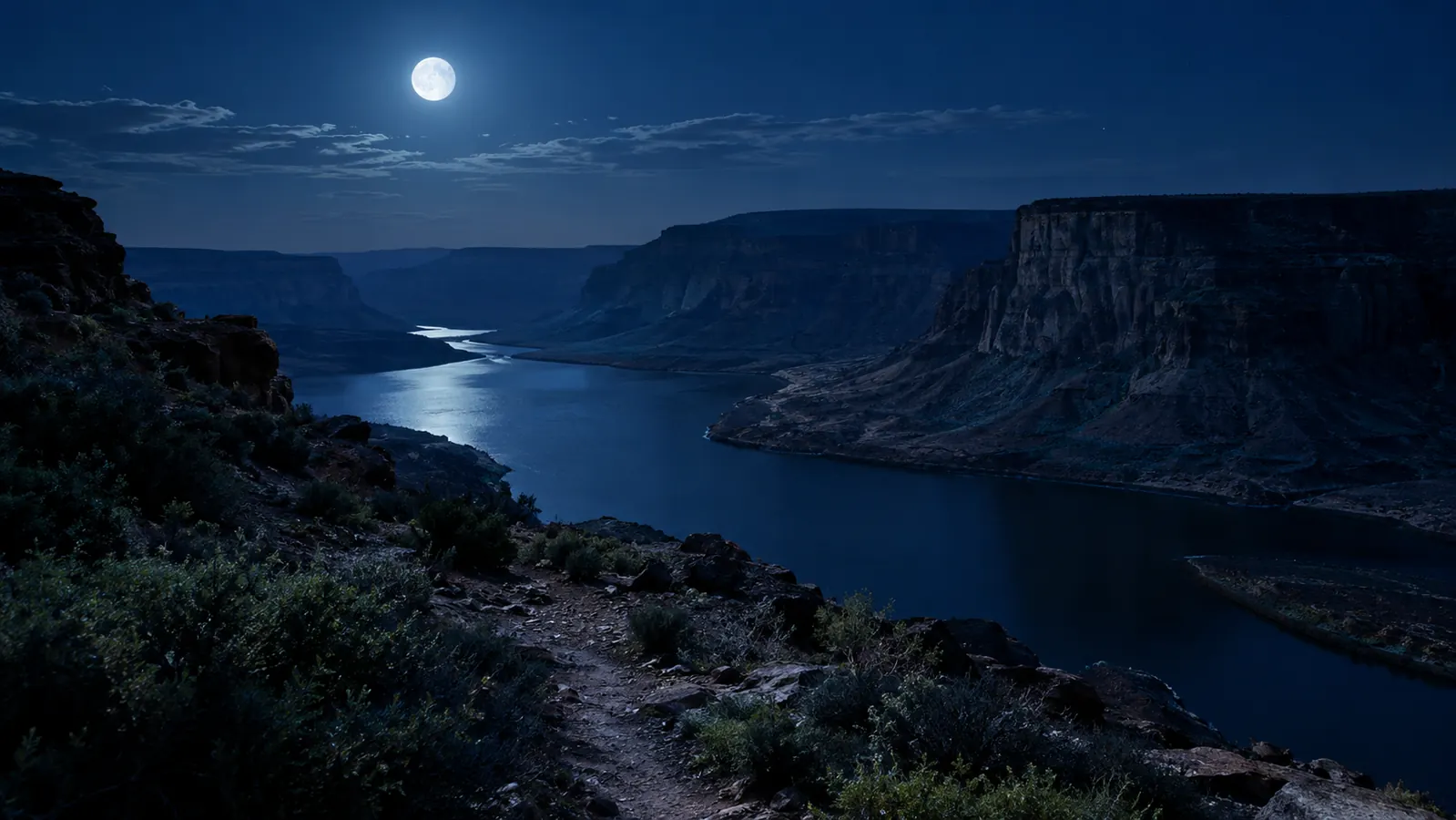
The honest shortfall is the beam on high in open country. The LHKNL is a flood light, and a flood light is only so useful when you need to see a trail marker a hundred and fifty yards out. It lights up everything in front of you and not much beyond that. Walking out of a canyon after dark, I want a tight beam that reaches down the trail, and this one will not give it to you no matter what the box claims. I have taken to carrying a small handheld spot light in the truck for the nights when I know I will be walking out late.
It also runs warm on high. Not hot enough to worry about, but warm enough that you notice it when you take it off to adjust the strap. High mode eats battery fast enough that I stopped using it for anything except the moments I genuinely needed it. If you buy this light expecting to run it on high all night, you will be disappointed, and I would rather tell you that now than have you discover it on a cold ridge.
The lens collects dust faster than I expected. Pollen from a September hillside and the fine grit from the bottom of the boat both find their way onto it, and a dirty lens cuts the beam more than you think. A quick wipe with a shirt tail fixes it, but it is a maintenance habit that none of the reviews mention. Keep the light in a pocket or a small sack instead of loose in the bottom of a pack, and you will wipe it less often.
One more honest note. I keep this light in the cab because it has become my default answer to 'what is that noise,' which is not really a hunting task. At ten o'clock on a Tuesday night I used it to trace a rattle in the front end of the Tundra, and the flood beam was exactly right for seeing a loose sway bar link while I held a socket in my other hand. That is the thing about a good headlamp. You stop noticing it, and then you wonder how you ever got along without it.
Alternatives I Considered
Before I settled on the LHKNL, I looked seriously at the Petzl Actik and the Black Diamond Spot, both of which run on AAA batteries and show up on every list written by people who actually spend nights in the woods. Their advantage is simple: you carry spare batteries and you never think about a wall outlet. The LHKNL's advantage is that you never buy batteries at all, and it is brighter for the same weight. It comes down to whether you trust a charger or trust a pocket full of spares.
Here is how I think about it now, after a full season. A Petzl with lithium AAAs will run for many nights on low, and when it dies you put in fresh batteries and you are finished with the problem. The LHKNL runs out and needs an hour on a charger before it is back in the game. If you fish within a few hours of home like I do, the rechargeable wins. If you are living out of a pack for a week, the AAA light wins, and pretending otherwise is how you end up walking out in the dark with a dead light.
What I Liked
- Wide, even beam with no harsh hotspot, which makes close work like tying flies or changing a treble hook genuinely easy
- True red LED that preserves night vision and is useful for pre-dawn walks
- USB rechargeable, and topping off in the truck between stops takes almost no effort
- Headband stays put under a cap or on a sweaty climb, and the tilt holds its angle
- Bright enough on high for camp chores and tent work, and the medium setting runs a long time
- Rock solid reputation: 4.5 stars across nearly 37,000 ratings
Where It Falls Short
- The battery meter is an optimist. Two bars can mean about twenty minutes of real light
- Runs only about 2 hours and 45 minutes on high, which is far short of what the listing implies
- Built in battery means no AA backup for long backcountry trips
- Thin rubber flap over the charging port looked creased after one season
- Flood beam does not throw far in open country, so it is weak for spotting trail markers or game at distance
- Runs warm on high and the lens picks up dust and pollen quickly
The meter showed two of three bars and gave me about twenty minutes of real light. I have charged this headlamp before every trip since, no exceptions.
Who This Is For
The LHKNL is for the person who fishes the same two rivers every week, hunts the same public ground every fall, and wants one headlamp that lives in the truck or the pack and works when you call on it. It is for the person who will plug it in the night before, the same way you charge your phone, and who does most of their night work within reach of a charger. That person will get more out of this light than they will out of a headlamp that costs twice as much.
Who Should Skip It
Do not buy the LHKNL if you are heading into the backcountry for more than a few days without power, if you need a beam that reaches out across open country, or if you hate the idea of a battery you cannot swap. Do not buy it if you plan to run it on high for hours at a time. In those cases a Petzl or Black Diamond on AAA batteries, with a pocket full of spares, is the better tool. That is the honest advice, and it is the advice I would give my own brother.
If that honest list of tradeoffs still sounds fine, this is your light.
The LHKNL is honestly bright, honestly comfortable, and honestly worth a spot on your shortlist, as long as you respect what the battery can do. Check today's Amazon price and order it before your next early morning trip.
Amazon Check Today's Price on Amazon →