
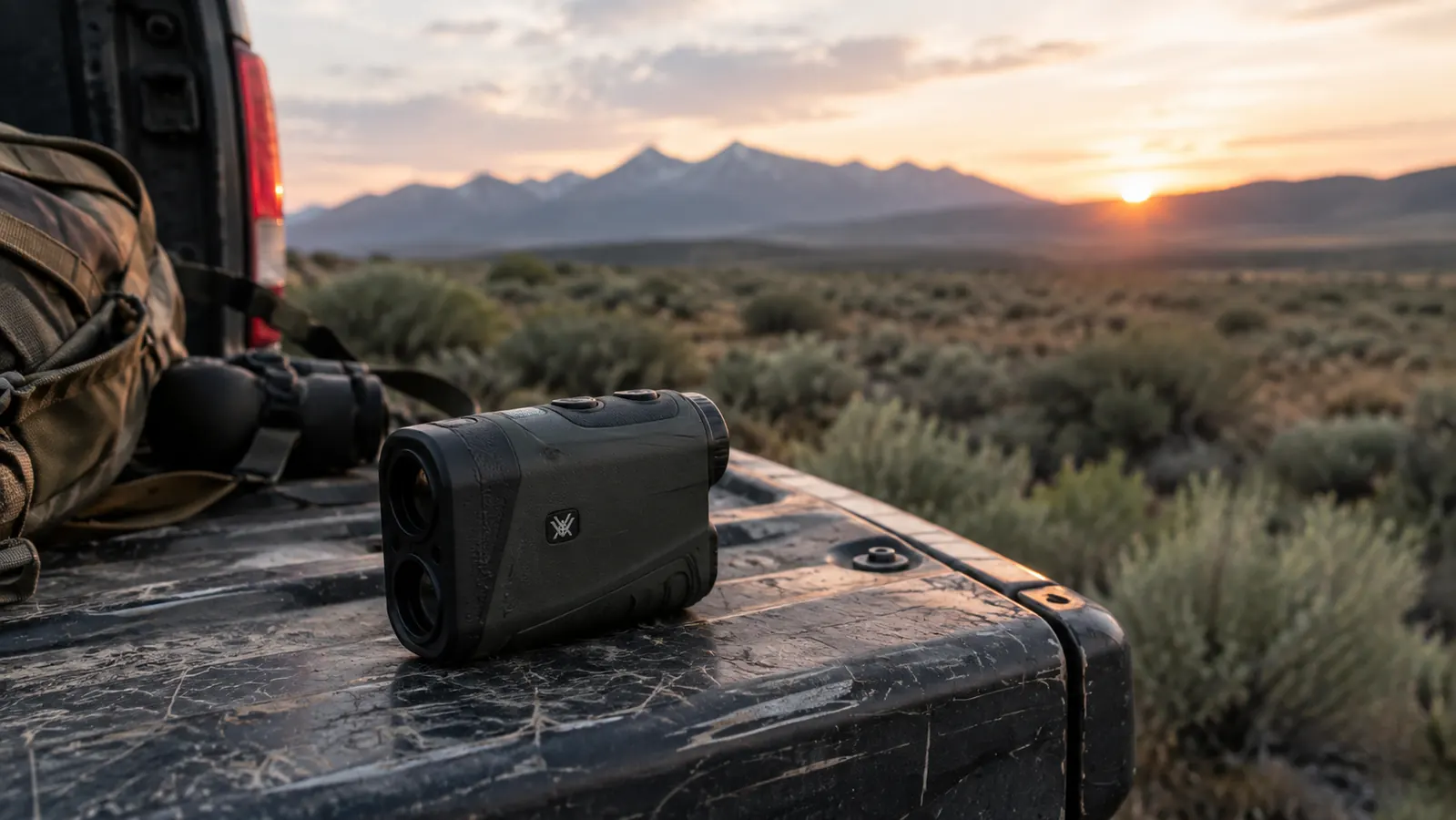
The TIDEWE rangefinder has ridden in the console of my Tundra for two full seasons. It has been bounced over gravel roads, left on the dash in July heat, and dropped once into the weeds along the Weber. It still turns on with the first click. That is more than I can say for the rangefinder it replaced.
I hunt elk in September and mule deer in October, mostly on public ground an hour or two up the canyon from Ogden. The country out there makes you guess distances all day. A bull at the edge of a clear cut can be 250 yards or 400. An old buck in a sage flat can look closer than he is. Guess wrong with a bow and you learn a hard lesson. Guess wrong with a rifle and you make a bad shot.
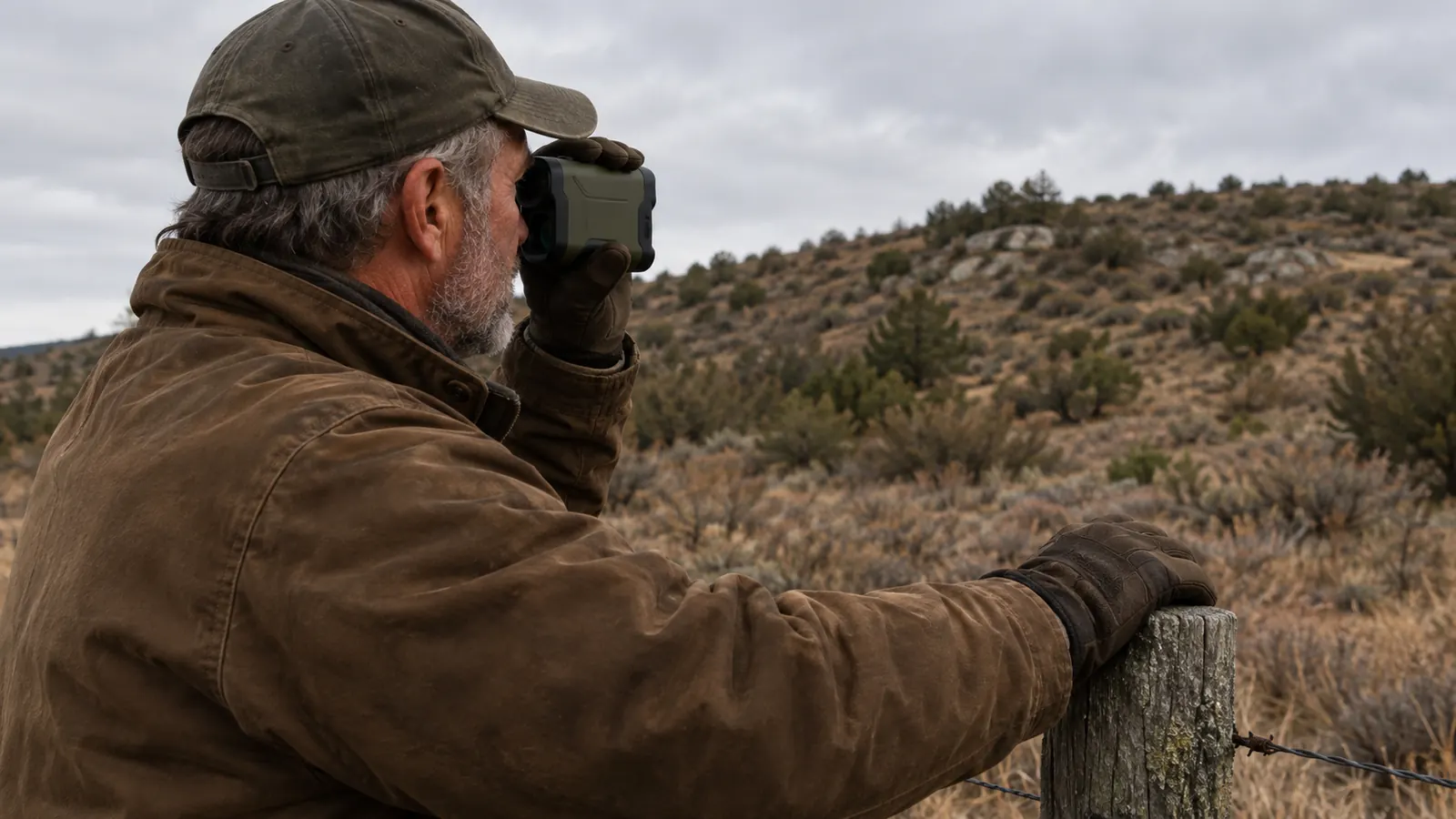
I bought the TIDEWE after my old unit fogged on the inside one wet morning. I dried it out, but it never cleared right, and the battery holder corroded before the season ended. I read a good many reviews, ordered this one, and started carrying it. What I found has changed which gear I reach for first.
The first thing I noticed was how it fits the way I work. The strap is quiet, which matters in elk country. The buttons are big enough to find with gloves on. The display reads clearly in low light. I can range a ridge, drop the unit against my chest, and keep moving.
The second thing was the battery. My whole September archery season ran on one charge. I charged it again before rifle season and never worried about it. That matters when you park a mile out and walk in before light.
The third thing was the range. I checked it against known spots around Willard Bay and down on the river. It stayed within a few yards out to four hundred. Beyond that I trust it enough to decide whether I should shoot, which is all I ask.
The battery ran all of September archery season on a single charge. That is the kind of thing that earns trust.
A rangefinder that survived two wet seasons
I bought the TIDEWE to replace one that fogged and corroded. Two seasons later, it still reads true. Take a look at today's price and see what fits your vest.
Amazon Check Today's Price on Amazon →I have been carrying it through two full seasons now, and the old frustrations are the first things I notice. The display is easy to read in dim timber. The buttons work with gloves on. The unit sits in a chest pocket without feeling like a brick. The battery runs a long time, too. My whole September archery season went by on one charge, and I topped it off before rifle season mostly because it had been sitting for a month.

I checked it against known distances more times than I can count. Around Willard Bay I set up at the hundred yard marker and ranged it. On the Weber I paced off fifty yards and read it back. It stayed honest. Some rangefinders I have owned would pick up the nearest bush and call it ninety yards. This one does not do that. I would rather have one straight answer than a pocket full of guesses.
It has been through rain, a snow squall, and one accidental dunk in the shallows. It came out of that dunk still running. I am not telling you to drop yours in the Weber. I am telling you mine has not quit yet. The moment I trusted it completely came last October, two hours before dark. A buck crossed a saddle at what looked like an easy shot. I ranged it, got 367 yards, and let the crosshair settle. The bullet landed behind the shoulder. The rangefinder gave me the distance, and I did the rest.
There are things I would trade, and I want to be straight with you. The pouch that came in the box is serviceable, not great. The lens cap is on a short cord, and I replaced it with a longer one. None of that changes how the unit performs. The thing I respect most is that I no longer think about it. It hangs on my chest or sits in the console and does its job.
After two seasons, the body is showing honest wear at the corners. It has not fogged, it has not died, and it has not lied to me about a distance. Part of that is the rechargeable battery, which I plug in the night before a trip the way I charge a headlamp. Part of it is the simple menu, with a scan mode and a distance mode that do not need a field manual. Part of it is the size. It disappears in a coat pocket when I fish the Weber, and it does not snag when I crawl along a ridge after elk.
What I'd Tell You If We Were Sitting at My Kitchen Table
If we were sitting at my kitchen table with coffee going, I would put it this way. You do not have to spend a fortune on a rangefinder. You need one that turns on when you ask it to, reads the distance you are actually looking at, and does not quit after a wet season. The TIDEWE has done those three things for me for two years. It has been in my truck, in the rain, in the cold at Pineview, and in a pocket while I fished the Weber. I have not thought about replacing it, and I have not once wished I had bought something fancier. I have owned units with more features that I did not use and with dials that started to feel loose. This one does not try to do much, but it does what it says. If it ever lets me down, I will be the first to tell you. Honest gear is rare. When I find it, I keep it. That is why the TIDEWE stays in the console of my Tundra, ready for the next trip out.
Two seasons of honest use
If your rangefinder let you down in the wet months, the TIDEWE has earned a place in your kit. Take a look at today's price and see if it fits the way you hunt.
Amazon Check Today's Price on Amazon →