
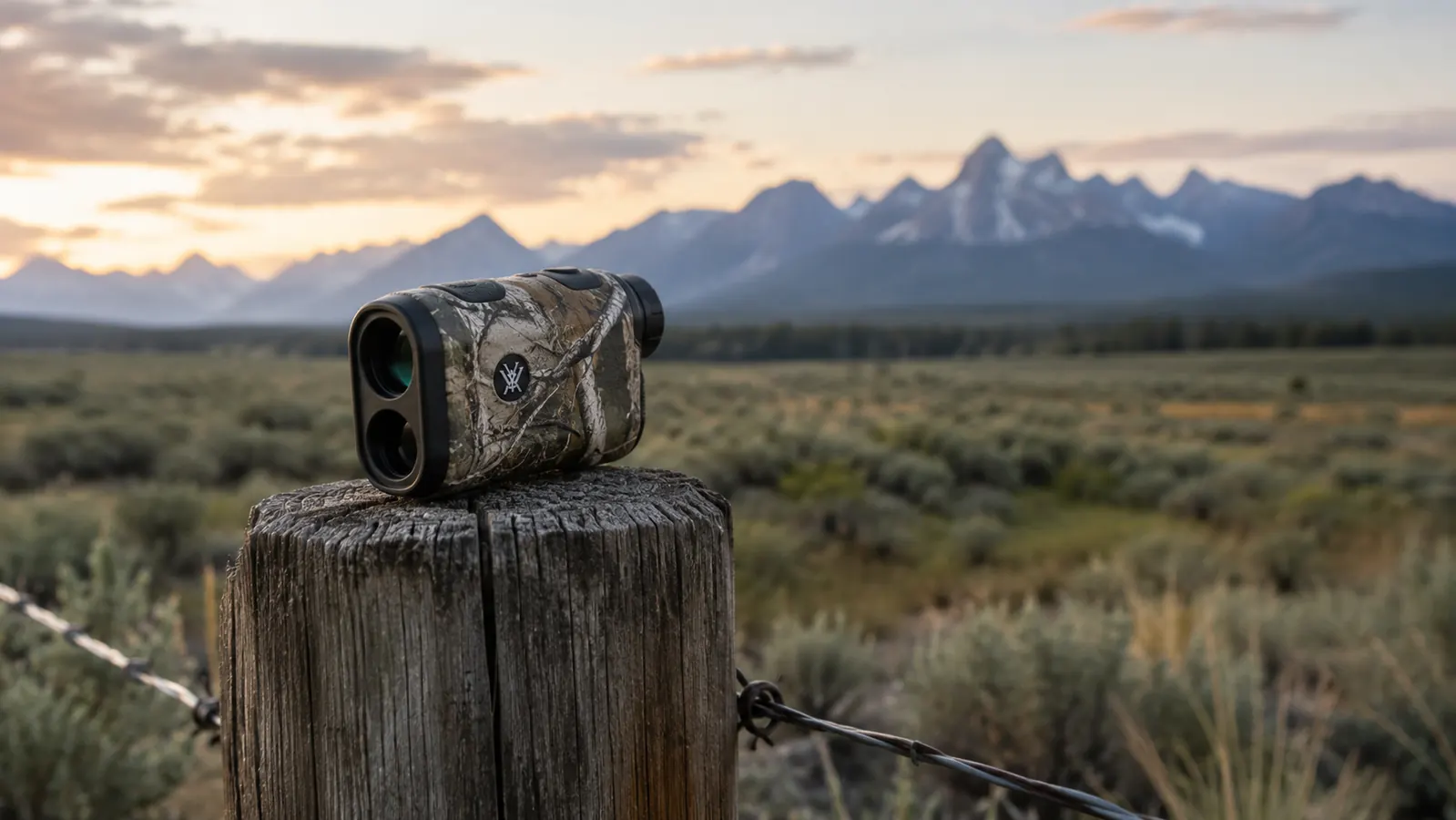
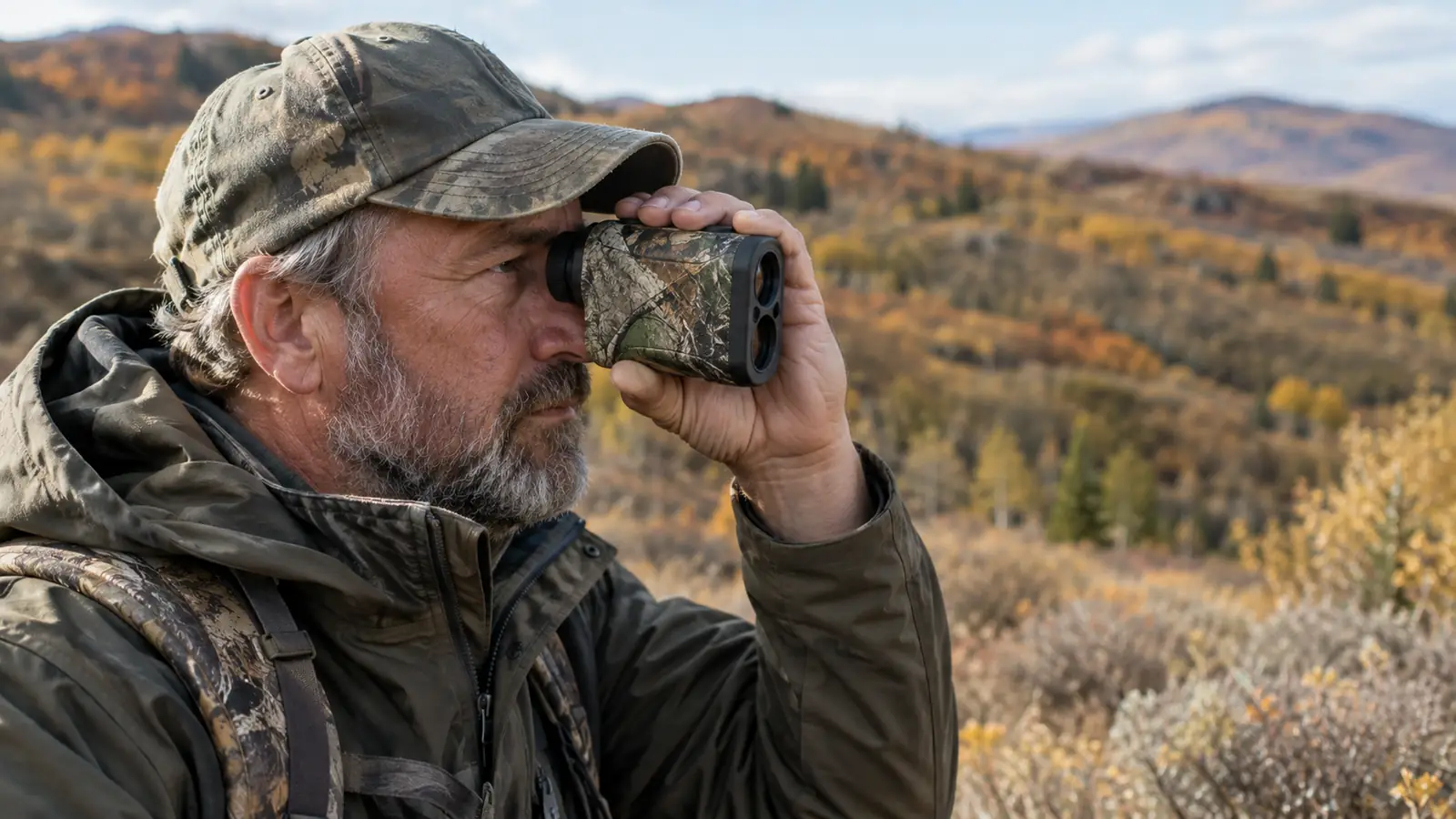
The October morning was cold enough that my breath hung in the air when I ranged the mule deer buck. The TIDEWE said 412 yards and said it fast, which mattered because the buck was already moving along the ridgeline. I dropped the rangefinder on its lanyard, settled into a steady rest, and made a clean shot at the distance the display gave me. That buck is why I carry a TIDEWE now, and it is also why I spent part of the fall with a friend's Halo Optics XL450 hanging in the truck. I wanted to know whether the TIDEWE was genuinely good or just good for the money. After four months of hunts, I can answer that.
I am not a gear collector. I am 58, retired after 22 years as a heavy equipment mechanic, and I hunt elk and mule deer on public land within a few hours of Ogden, Utah. That means everything I own has to survive being tossed into the bed of my 2016 Tundra and then carried uphill in a pack. I judge a rangefinder the same way I judged wrenches: does it do the job every time, and does it keep doing it after a season of weather? The TIDEWE and the Halo both do the job. They do it differently, and the difference is worth understanding before you spend money.
How I Compared Them
I did not set up a lab bench or a shooting rest with sandbags. I used both rangefinders the way they get used around here, on the same ridges above the Weber River, in the same cold rain, and on the same deer and elk. I ranged fence posts at known distances, big boulders on the far side of canyons, and more than one legal buck that made the mistake of standing still. When the two units disagreed, which was rare, I set up a target and ran them again until they settled. The Halo spent most of its time in my pack or on the passenger seat of the truck. The TIDEWE lived on a lanyard around my neck and got handled every time we stopped to glass.
The day that told me the most started with rain at 5,200 feet and ended with me stepping into a snowmelt creek while trying to circle a bull. Both rangefinders got wet that morning, both fogged briefly when I carried them into the tent later, and both cleared up without trouble. The difference showed in how they felt afterward. The TIDEWE has a rubber armored shell, and it shrugged off the wet and the bumps without a mark. The Halo made me want to dry it off and put it away before anything else. That is not a harsh word against the Halo, because it never missed a reading. It just told me which one fits the way I actually hunt.
Head to Head on Paper
The table below is the short version. It comes from the spec sheets and from my own use, and where the two differ, I say which one I found better.
| TIDEWE Rangefinder | Halo XL450 | |
|---|---|---|
| Rated range | Available in 700 and 1,000 yard versions. I used the 1,000 yard model; it read a canyon face at 900 and asked for more. | 450 yard rating, and it is honest: inside that it locks on fast, past that it does not play. |
| Low light clarity | Clear daylight view; edges go soft at first and last light. | Noticeably brighter image with better contrast in timber at dawn. |
| Battery | USB rechargeable, no battery drawer at all. I top it off every few weeks. | Uses a standard replaceable battery that is easy to find but easy to forget. |
| Field build | Rubber armored body with a camo pattern; it has bounced around my truck bed all fall. | Slicker, cleaner shell. It survived the same hunts but showed the bumps. |
| Pocket size | Fine on a lanyard or in a pack; too bulky for a shirt pocket. | Small and light enough to disappear in a jacket pocket. |
| Price | Lower price, and it goes on sale often. | Higher price, some of it for the name and the brighter glass. |
| Job it does best | One tool for bow elk, rifle deer, and everything between. | A close quarters unit for hunters who keep shots inside 200 yards. |
Where the TIDEWE Rangefinder Wins
Range is the first place these two split, and it is the reason I reach for the TIDEWE on rifle hunts. I use the 1,000 yard version, and it is the one that has lived on my lanyard since September. My September elk hunts keep most shots inside 80 yards, which does not need a long ranging instrument. October mule deer on public land is the opposite. Bucks feed in big country, and they do not schedule their appearances for easy walks. I ranged deer this fall at 480, 520, and 610 yards from one ridge, and I watched a bull elk cross a bowl at 830. The TIDEWE read all of those instantly. The Halo cannot, and no amount of nice glass fixes a hard limit at 450 yards. People say range only matters if you can shoot that far, but ranging far is how you decide where to move next, and that is most of public land hunting.
The battery is the second split, and it is the one that surprised me. I am old enough to have spent years changing batteries in headlamps with cold fingers, so I did not expect to care much about a charging cable. I was wrong. The TIDEWE charges from the same USB port as my headlamp, and I have not touched a battery for it since September. The Halo uses a standard replaceable cell that is easy to find in any hardware store, but every time I had to swap it, I wished I did not have to. It is not a deal breaker, just one more thing to remember on a cold morning.
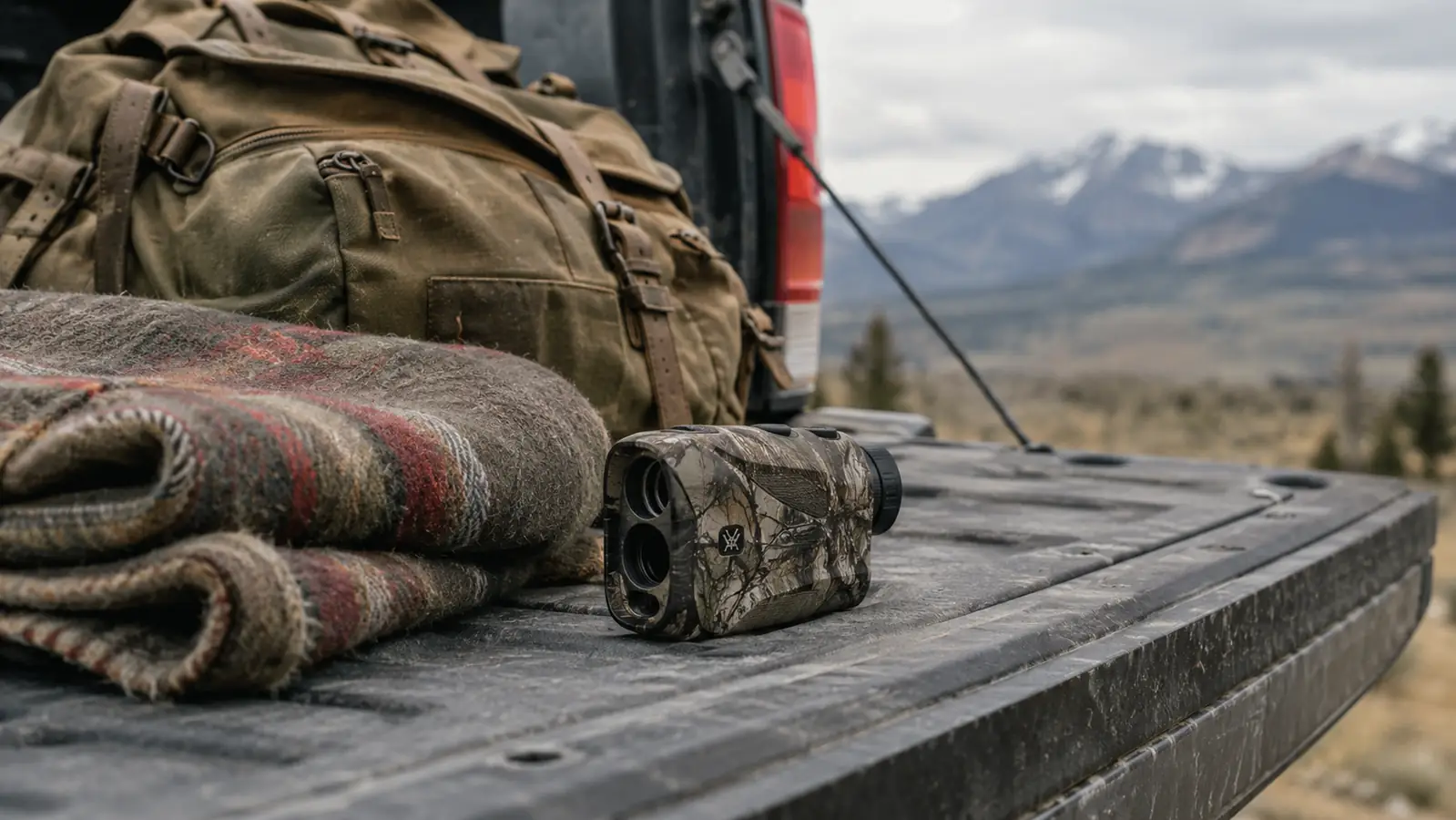
Then there is what I will call the truck bed test. My 2016 Tundra has 190,000 miles, and its bed has carried firewood, coolers, muddy packs, and the occasional deer. I have thrown the TIDEWE back there loose more than once, and the rubber armor takes it without complaint. It has also been rained on, sat out in a cold snap, and spent a full season on a lanyard. It still looks like it did in September. The TIDEWE is also the cheaper tool, even before sales, and that matters when you are buying fuel for the next hunt. You are not giving up function to save the money. You are mostly giving up the name.
Where the Halo XL450 Wins
I am not going to pretend the Halo does not have advantages, because it does, and the biggest one shows up in dark timber. My best October morning starts black and then turns gray in the trees, and the first legal minutes are often the only chance I get at a buck. Looking through the Halo in that light is genuinely like turning up the brightness. The image stays crisp, and the deer separates from the brush sooner. The TIDEWE works at legal light, but its view goes soft and flat in the same conditions. If most of your shooting happens at dawn in thick cover, the Halo is the better window to look through.
The second advantage is that the Halo disappears. It is smaller and lighter than the TIDEWE, and it slips into a jacket pocket or a chest pack without making itself known. On a long walk in, I forgot it was there. The TIDEWE, by contrast, is always making itself known. It is not heavy, but it is present. For a bow hunter who wants a rangefinder for a handful of close shots and does not want to feel it for the other six hours of the day, that is a real reason to pick the Halo.
The Halo gives you better glass. The TIDEWE gives you more range, a rechargeable battery, and a lower price. For most hunters, that is the trade worth making.
What the Numbers Don't Tell You
The spec sheets do not tell you what it is like to range a buck at the end of a wet day when you are tired. That is when the TIDEWE's simple buttons helped. One press for power, hold for scan, done. I set the mode on the first day and never touched the menu again. The Halo's controls are not difficult, but they took more attention the first few times, and in the dark that attention matters. Simple is a feature, even if it never makes it onto the box.
I also learned that I trust both numbers. On targets I could verify, both units agreed within a yard of a measured distance. At 200 yards, that is good enough. At 500 yards, the difference between a TIDEWE reading and my own pacing estimate is something I no longer worry about. The bigger difference between the two is not accuracy. It is how each one behaves in the conditions you actually hunt.
That does not mean the TIDEWE is perfect. Here is the part I would warn you about: the view in low light is its weakest point. If most of your shooting happens in the first minutes of legal light, you will notice it. The Halo handles that situation better, and it is the one reason I could see a hunter choosing the Halo instead. Know that going in, and neither unit will surprise you.
For big country and a truck bed life, the TIDEWE is the one I carry
It is the rangefinder that stayed on my lanyard after four months of direct comparison. The range, the rechargeable battery, and the armor all held up. See today's price and recent hunter reviews on Amazon.
Amazon Check Today's Price on Amazon →Who Should Buy Which
Here is how I would settle it if you were standing at my tailgate. If you hunt public land the way I do, where a rifle shot can open past 350 and the gear has to survive the bed of a truck, buy the TIDEWE. It ranges farther than you will probably need, it charges instead of eating batteries, and it costs less. The low light view is not as pretty as the Halo's, but I have yet to miss a shot because of it. For a hunter who wants one rangefinder to cover a September bow hunt and an October rifle hunt, the TIDEWE is the better value.
If your hunting is different, the Halo makes sense. If you spend most of your time in brushy country where shots stay under 200, want the brightest view you can get at dawn, and want something that disappears into a pocket, the Halo XL450 is the better choice. It is a fine instrument, and I would not argue with anyone who picked it for those reasons. You are paying more for it than the TIDEWE, but you are getting the best glass in the pair and the smallest package. What you are not getting is reach, and that is why it is not in my pack.
The Bottom Line
Buying a rangefinder is not like buying a truck, but it is closer than people think. The Halo is the polished, well-optioned model that you enjoy looking at. The TIDEWE is the work truck that you throw gear into without a second thought. Four months into this comparison, I open the door and grab the TIDEWE every single time. It does everything I need, it takes the abuse, and it leaves money in the fuel budget. If the Halo were the only rangefinder I could buy, I would own one and be happy with it. But it is not the only one, and I would rather have the extra reach.
Both companies make honest gear, and I do not think you will be disappointed either way. If you are still reading because you want someone to settle it, here is my answer: for the way most of us actually hunt, I would take the TIDEWE. Order it, set the mode once, and spend the season ranging deer instead of wondering which unit to buy.
My honest answer after four months: look hard at the TIDEWE before you pay more for the Halo
The Halo is a good rangefinder. The TIDEWE matches it where it counts and beats it on reach, battery, and price. Check the current price and recent reviews before you decide.
Amazon Check Today's Price on Amazon →