
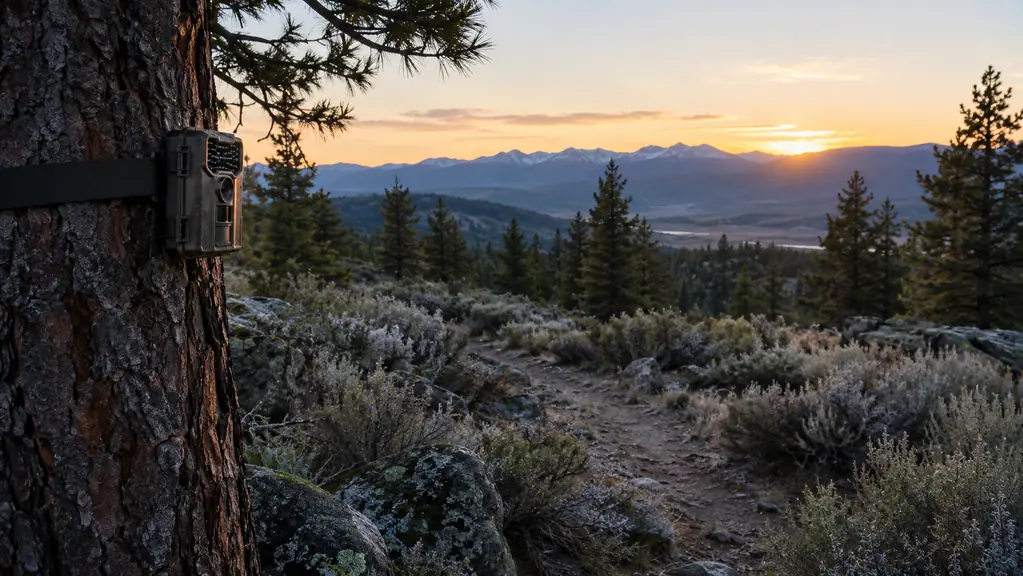
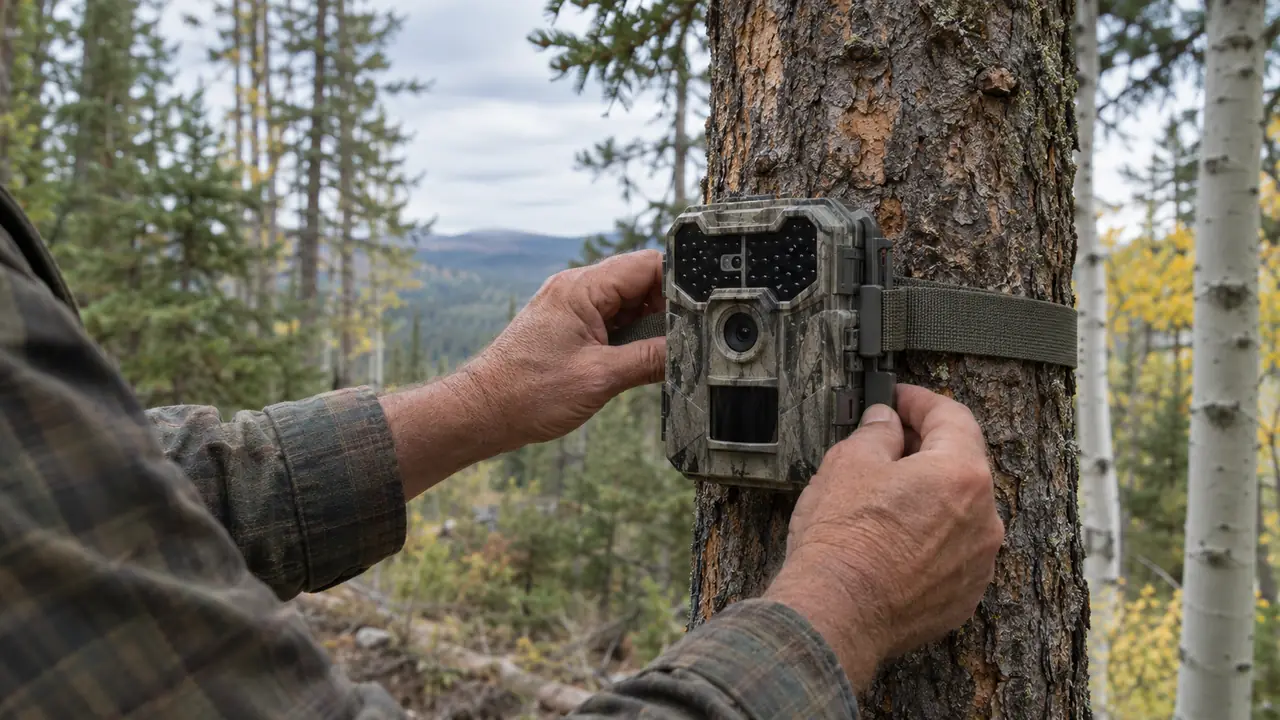
I will not tell you the WOSODA trail camera is the finest I have ever owned, because that is not true. It is a good, honest camera that does most of what a public-land hunter needs for a price that lets you buy two and still sleep at night. I ran a two-pack on a ridge north of Ogden from August 23 through October 4. One camera watched a mule deer trail at roughly 7,400 feet. The other sat near an elk wallow at 8,100 feet. They went through rain, hail, dust, and one cow elk that rubbed her neck on the strap for ten minutes. This review is what the listing photos do not show you.
Hunters on the tailgate ask one thing when they see these cameras in the back of my Tundra: Are they actually worth it? I understand the question. When a two-pack sells for less than many single cameras, you wonder where the corners got cut. Some of those corners show up on a card pull. Some do not. I will sort out both here.
The Quick Verdict
Reliable and honest for the money, with real limitations in night image quality and zero wireless convenience. I kept both cameras on the ridge all season and would put them out again tomorrow.
Amazon Check Today's Price →I would buy these again tomorrow
The WOSODA two-pack earned a permanent spot in my gear pile. No other camera I have used gives me this much coverage for this little money. See today's price and current reviews on Amazon before you decide.
Amazon Check Today's Price on Amazon →How I Tested the WOSODA Trail Cameras
I tested the WOSODA cameras the same way I have tested every camera for the last ten years: I took them somewhere I had to work to check. The first camera went on a mule deer trail where I had found a set of tracks that measured four and a half inches across the pad. I hung it about 34 inches off the ground and angled it slightly downhill so it would catch a deer before it hit the scrape. The second camera went 40 yards off a wallow that had fresh elk sign, including some mud on the bark of a nearby pine that had to have come from a bull.
I used 32 gigabyte SanDisk cards and set both cameras to take a three-photo burst with a 30 second interval between triggers. I checked cards every nine to twelve days, and I kept a spiral notebook in the truck to write down which card came out of which tree. I did this because the worst part of public-land scouting is not the camera, it is the miles. Every card pull costs fuel and shoe leather, and I did not want to mix up my data.
The weather cooperated about half the time. We had a dry stretch in late August, then a wet week in September where the ridge got over two inches of rain in three days. One camera faced the prevailing wind and took a direct hit from a thunderstorm on September 17. The housing never leaked. I had no fogged lens and no water inside the battery compartment. That matters when you live several hundred yards from the nearest dry truck seat.
What the Listing Photos Do Not Show You
First honest truth: the night photos are not the crisp, clean images in the product listing. They are black and white and they are grainy. You will not mistake them for a daytime shot. On a moonless night, a deer at 40 yards becomes a gray blob with antlers, not a portrait. That is normal for a camera in this class, but the marketing photos do not prepare you for it.
Second honest truth: the door is tight on a new unit. I have big mechanic hands from 22 years turning wrenches, and I still had to get the angle right before the latch would let go. After a week of use it loosened up, but your first card pull in the dark might test your patience. Bring a small flashlight and a flathead screwdriver or a sturdy fingernail, because the latch will fight you until it breaks in.
Third honest truth: this is not a cellular camera and it is not a Wi-Fi camera. It does not send pictures to your phone. You hike to the tree, open the door, swap a card, and close it back up. That is the tradeoff you accept at this price. If you do not have the legs for that kind of scouting, the WOSODA will frustrate you no matter how well it performs.
Where It Surprised Me, For the Better
The trigger speed is better than I expected. On September 12, I pulled a card that had a forkhorn walking through the frame at 8:14 in the evening. The camera caught six photos from the moment his left shoulder entered the frame until his back legs were out of it. He was not running. He was walking slow, stopping to sniff the scrape, and the WOSODA still captured every step without a dead gap.
Battery life also impressed me. I put in fresh lithium AAs on August 23 and never changed them during the entire test. That is six weeks of constant standby, three-photo bursts, and cold nights above 7,000 feet. When I pulled the card on October 4, the battery indicator was still showing a solid two bars. I have owned fancier cameras that needed new batteries after two weeks of heavy trigger activity.
The waterproofing deserves credit too. After that September storm I expected to find moisture inside the lens housing. Instead, the camera was dry, the SD card was dry, and the photos from the night of the storm came through clear enough to see a pair of does walking the ridgeline. For a camera in this price range, that is the kind of reliability that makes you trust it on a long hunt.
Where It Falls Short, For Real
The biggest weakness is low-light image quality. I have already mentioned the grain, but let me be specific. On a night with no moon, a deer at 30 yards is identifiable as a deer, but you cannot always count the points on a buck. On a night with a half moon, the image improves but still does not match what you get from a camera that costs three times as much. If scoring a specific buck from a photo matters to you, you will find this camera limiting.
There is also unit variance. My two cameras were not identical in behavior. The one on the elk wallow triggered noticeably faster than the one on the deer trail. I swapped cards, swapped batteries, and even swapped positions to make sure it was not a location issue. The wallow camera simply had a quicker trigger. That is the kind of inconsistency you accept with inexpensive electronics, but it is worth knowing before you rely on one unit to catch a specific scrape.
The mounting strap is adequate but not great. It is a simple webbing strap with a buckle, and it does the job. After a few weeks of sun and rain, the webbing stretched enough that I had to retighten it on both cameras. I did not lose a camera, but I will probably add a small cable lock before I leave one out for an entire winter. For a stationary setup over a long season, plan to give the strap a tug every time you visit.
The September 12 Card Pull That Made My Mind Up
September 12 was my fourth card pull, and it was the one that settled the question for me. I hiked in before daylight with a cup of coffee gone cold in my hand. The trail camera on the deer trail had eight photos from the previous night, starting at 7:58 p.m. The first photo showed a doe crossing with her head down. The third photo showed a decent two-point behind her, and the fifth photo showed the same buck stopped broadside, looking back over his shoulder.
None of those photos was magazine quality. They were grainy and a little soft around the edges. But they told me exactly what I needed to know: that buck was using the trail after dark, moving east to west, and he was about 18 inches of antler on each side. I adjusted my stand location the next weekend because of those photos, and I passed a shot at a smaller buck on October 2 while waiting for the two-point to show himself in daylight. That is what a trail camera is for, and the WOSODA did it.
WOSODA Versus the Alternatives
I have owned and tested trail cameras from the big brands, including some that cost more than my first reloading press. If you compare the WOSODA to a premium cellular camera, it loses on every feature that matters to a remote hunter: no live photos, no remote shutoff, no instant trigger data. But if you compare it to what most of us actually do, which is hike in, swap a card, and read the results on a laptop, the WOSODA wins on value almost every time.
I also tested it against a single-camera setup on a different ridge last season. With the WOSODA two-pack, I covered two separate locations for the same money I would have spent on one premium camera. That meant I could watch both an early-season wallow and a late-season trail without choosing between them. For a hunter on a budget, that kind of coverage matters more than a slightly sharper night photo.
What Nobody Tells You About Buying a Two-Pack
The real appeal of the WOSODA is not the camera in your hand, it is the second camera still sitting in the box. Most of us need to cover two spots at once, and a two-pack does that without forcing you to move a camera every few days. But nobody tells you that you will probably use one camera more than the other. I did. The wallow camera got all the attention because that was where the elk were. The deer trail camera still worked perfectly, it just did not have the same action.
Nobody tells you that a two-pack means twice the card pulls, twice the batteries to buy, and twice the chance that a strap will work loose. It is not twice the work, but it is not zero extra work either. You need to be honest with yourself about how often you can actually get back into the field. If you only check your cameras every three weeks, the second camera might sit there taking photos of wind-blown grass and nothing else.
Pros and Cons
What I Liked
- Excellent battery life for a six-week test without a single change
- Trigger speed catches walking deer without dead gaps
- Solid waterproofing after heavy rain and a direct thunderstorm
- Two-pack covers two locations for the price of many single cameras
- Simple controls and clear menu system, no app to fight with
- Easy SD card access once the latch loosens up
- Good enough detection range for typical trail and wallow setups
Where It Falls Short
- Night photos are grainy and black and white only
- No cellular or Wi-Fi option, so every check is a hike
- Unit variance means one camera may trigger faster than the other
- Mounting strap stretches and needs regular tightening
- Latch is stiff until it breaks in
- Not for hunters who need to identify specific antler points from far away at night
The night photos are grainy and the camera will not send a single picture to your phone, but it caught every animal I cared about and never quit on me in a cold rain.
Who This Is For
The WOSODA two-pack is for the hunter who treats camera scouting like the job it is: hike in, pull the card, look at the photos, and make a plan. It is for the person who does not need a notification on their phone at 11 p.m., because they are asleep anyway and the deer are still out there. It is for the hunter who would rather cover two ridges than own one camera with a cellular plan they will forget to renew.
It is also for the practical buyer who has owned expensive cameras and learned that a camera is only as good as the trail it sits on. If you know where the deer are and you just need a quiet, reliable eye to confirm it, the WOSODA gives you that without a lot of fuss. My Tundra is 10 years old with 190,000 miles on it, and I treat gear the same way: if it works, keep it; if it is overpriced, leave it. This camera works.
Who Should Skip It
Skip the WOSODA if you are the kind of hunter who wants to see photos while you are at work or on vacation. That is not a criticism, it is just a different job. If you need to know the moment a buck steps into a clearing so you can adjust your hunting strategy that same evening, you need a cellular camera. The WOSODA will not do that, and no amount of wishing will make it do that.
Skip it if you judge a camera by the beauty of its night images rather than the information in them. I have looked at plenty of fine art taken by expensive scouting cameras, but I have never shot a buck because the photo was pretty. If you need to count the exact number of points on a buck at 50 yards after midnight, you will be disappointed with the grain. Spend the money on a premium camera instead.
Skip it if you will only check your cards once a month. The WOSODA does not have the battery life or the memory capacity to run unattended for a full month in a high-traffic area. You will come back to a full card and a dead battery, and you will blame the camera when the real problem was the schedule. This camera earns its keep with regular attention, just like any other good tool.
When a ridge is worth hunting, two eyes beat one
That is the real argument for the WOSODA two-pack. You cover a wallow and a trail at the same time for less than one premium camera. If that sounds like your kind of scouting, check today's price on Amazon and read through the recent reviews before you commit.
Amazon Check Today's Price on Amazon →