
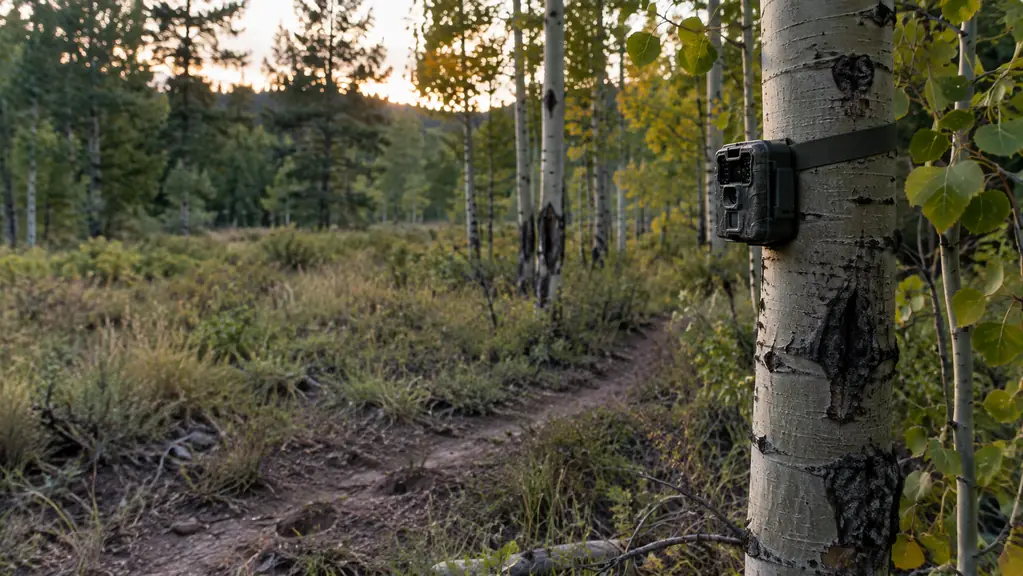
Last season I ran two trail camera setups on the same ridge of public land, about a half mile apart. The WOSODA two-pack went in first, one camera on a drainage I have hunted mule deer for fifteen years and the second up on a bench above it. The SPYPOINT Flex-M went in on a saddle where two fingers of timber meet. I used the same cards in both, checked them on the same weekly loop, and kept a small notebook in the truck so I would not have to trust my memory when rifle season ended. The question I was trying to answer was simple: which camera earns a permanent spot in the bed of my Tundra when the old ones finally quit.
Here is the short version. The WOSODA is the camera I would buy again for the way I hunt. Two cameras in one box, no monthly plan to babysit, and nothing about it that needs a phone to work. The SPYPOINT Flex-M is the better tool if you cannot check a camera for two weeks at a time and you need photos hitting your phone so you know when to move in. That makes the choice easier than it looks. Buy the one that matches how you really hunt, not the one that sounds good in the store.
| WOSODA 2-Pack | SPYPOINT Flex-M | |
|---|---|---|
| What's in the box | Two complete cameras in one box, so you can cover two spots right away | One camera. You buy a second if you want a second set of eyes |
| Ongoing cost | No plan. No card on file. You just pull the SD card | Needs a paid monthly cellular plan before it will send photos |
| Getting your photos | You walk in and pull the card when you are ready | Photos come to your phone in near real time from the field |
| Setup in the field | Set date, set delay, strap it up, walk away | Pair the camera, set up the app, activate the plan first |
| Best for | The hunter checking two nearby spots on a weekly loop | The hunter who needs eyes on a distant unit between visits |
How I Ran Them This Season
I hunt elk and mule deer on public ground a few hours from Ogden, and my year runs on a fixed calendar. Archery elk starts in September, rifle deer in October, and I fish trout on the Weber and the Ogden from April on when the season allows. Most of my camera work happens while the aspen is turning. I set the WOSODA pair to take three stills when the motion sensor fired and left them on the factory delay for the first two weeks. The SPYPOINT Flex-M went on the same setting, but its cellular radio meant a handful of photos landed on my phone before I ever walked in. That one difference changed how I used each camera, and it is the whole story of this comparison.
The ridge I used has a weak cell signal at the top and nothing at the bottom. The Flex-M worked when I kept it high and turned into a brick when I moved it low. The WOSODA does not care about signal at all because it never tries to send anything. I checked both cameras by hand every six or seven days, and in between the WOSODA sat silent, which is exactly what you want from a camera with no radio. If your hunting ground has good coverage, the SPYPOINT looks great. If it does not, no cellular camera in the world will fix that for you.
Where the WOSODA 2-Pack Wins
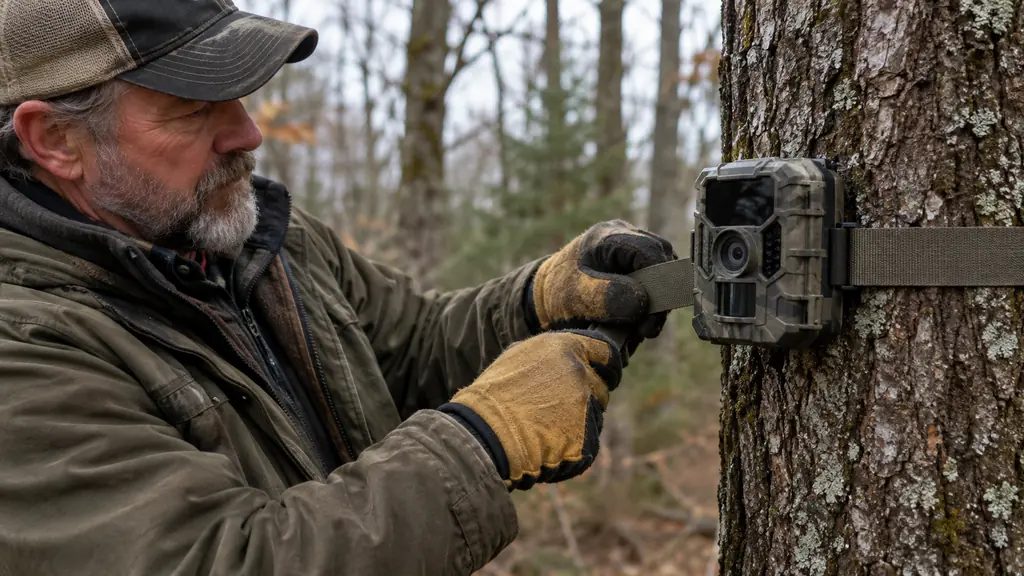
The WOSODA wins on the two things that matter most to me. The first is the two-for-one box. On that same ridge I covered a lower drainage and an upper bench with one purchase. I did not have to choose which spot was more important, because both got a camera for well under the price of one premium unit. The second win is the lack of a plan. There is no card on file and no renewal to remember. When a camera sits on public land for two months, that simplicity quietly matters.
The third win is how little thought it takes in the field. The WOSODA has a strap and a latch, you set the date and the delay, and you walk away. When I check cards before first light in October, fewer steps is better. The body came through a wet season without letting moisture inside, and the pair rides loose in a plastic tote in the bed of the Tundra without complaint. That is the bar I set for gear that lives outdoors. It should not need babying.
Where the SPYPOINT Flex-M Wins
The SPYPOINT Flex-M wins the one category that matters most to a certain kind of hunter: it puts eyes where you are not. I parked the truck at the bottom of the ridge and got photos of a buck working the saddle three days before I could walk back in myself. On a piece of ground you can only reach on weekends, that delivery is worth real money. It also changes how you hunt even when the photos are boring. You stop burning gas to check an empty camera, and you start being able to wait for a reason to move.
Where the Flex-M really shines is the long sit. When I hunted a unit two hours from home, one look at my phone on a lunch break told me whether the evening was worth the drive. I did not have to guess and I did not have to drive blind. For that kind of hunting, the cellular camera is not a luxury. It is the difference between showing up on the right day and showing up a day late. I have been the man who shows up a day late more times than I care to count.
The Catch With Each One
Neither camera is perfect, and the WOSODA's biggest catch is the thing it does not do: it cannot call you. If a storm keeps you off the ridge for ten days, you come back to ten days of guessing. The photos are on the card and the card is in your hand, but the story is always a little old by the time you read it. The other catch is typical of a budget pair. The night images were usable but not beautiful, and I learned to point the cameras where the animal would be, not where it would cross at a dead run.
The catch with the SPYPOINT is the plan and the signal. You have to pay a monthly subscription before the camera will send a single photo, and that bill never stops coming. On the ridge I used, the camera needed to sit high to hold a signal, which put it on the wrong side of the saddle for the trail I most wanted to watch. A cellular camera is only as good as the network under it. If you hunt the bottom of a deep canyon, the Flex-M will frustrate you no matter how good its software is.
Things That Do Not Show Up in a Spec Sheet
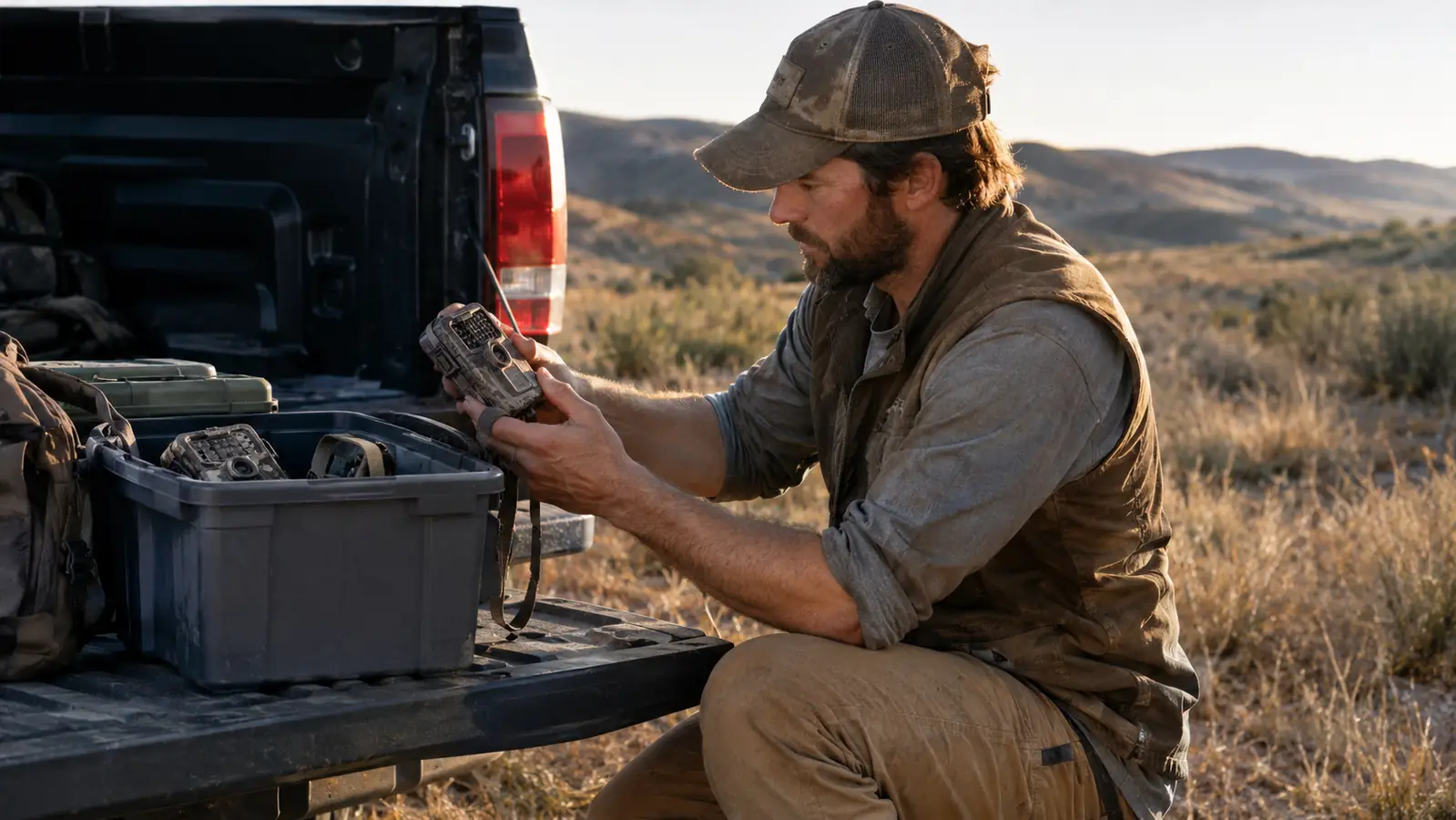
Ruby, my chocolate Lab, came along on most of the card pulls. She is steady in a boat and hopeless in a blind, but she is good company on a two mile walk. She also taught me something about mounting. She bumped a camera I had strapped at knee height and set it off, so now I mount everything chest high. Trail cameras are not complicated machines. Most mistakes come from how you hang them, not from the electronics inside.
Battery life is where budget cameras usually show their weakness, so I watched it closely. Both setups ran through September and October on one set of lithium AAs. The WOSODA pair still read full bars when I pulled them in early November, and the Flex-M had dropped a bar, which I expected because the cellular radio is always listening. If you hunt in real cold, use lithium cells in both. Alkaline cells get sluggish below freezing, and that is true of every trail camera I have run.
The other lesson is about memory cards. I used 32 gigabyte cards in all three cameras and never filled one in a month of still photos. You will fill cards fast if you set video on, so keep a spare card in the truck. I also got in the habit of formatting cards in the camera after every pull, which cut down on corrupted files. That habit is worth having no matter which camera you buy.
What I Would Tell a Friend
Trail camera buyers overthink photo quality. In daylight, every modern camera in this price range takes a clear shot of a deer standing still. The difference shows at night and at the edges of the frame. The WOSODA night shots had a chalky look when the animal was more than sixty feet out, and the Flex-M held detail a little farther. Neither one produced the kind of image you frame and hang. Both produced images good enough to tell me where to be, which is the only job that matters.
If I were advising a friend, I would put it this way. Decide whether you are buying information or convenience. The WOSODA gives you information on your own schedule for a one time cost. The SPYPOINT gives you convenience on the network's schedule for an ongoing cost. Most of the hunters I know already have too many monthly bills. That is why, for my ridge and my loop, the WOSODA earns the permanent spot in the bed of the Tundra.
For weekly checks on public land, the WOSODA 2-Pack is the one I keep strapping up
If you can check your cameras on a normal scouting loop, this two-pack gives you two sets of eyes for about the price of one, with no data plan and no app to learn. It covered my lower drainage and my upper bench all season long.
Amazon Check Today's Price on Amazon →Who Should Buy Which
Buy the WOSODA if you hunt close to home, check your cameras every week, and would rather spend your money on two spots than on a monthly bill. It is also the better choice if you are putting cameras on public land where a cellular signal is a coin flip. You trade live delivery for a lower cost and a simpler season, and for most of my hunting that is a trade I make gladly.
Buy the SPYPOINT Flex-M if your camera sits far from the truck, if weather keeps you off the mountain for long stretches, or if you need to know when a buck is using a saddle before you burn a tank of gas. It is a tool for hunters who cannot check cards on a schedule. If you are willing to manage a plan and you have confirmed coverage where you hunt, the Flex-M will earn its keep. If that sentence made you wince, the WOSODA is your answer and you can stop reading.
Bottom line: the two cameras are not really competitors. They are answers to two different questions. Ask yourself who has to walk to the camera and how often, and the right box picks itself. For the way I hunt, with a tired old Tundra and a weekly loop, the answer has been the WOSODA 2-Pack.
The WOSODA 2-Pack is my pick for two spots on one ridge
Check the current price on Amazon and see if the two-pack fits your scouting loop. If you are weighing a cellular camera against a simple no-plan pair, this comparison gives you the honest breakdown.
Amazon See Today's Price on Amazon →